
NEWS & EVENTS

Boba Tea Import Regulations in the USA: Updated Tariffs, Customs Clearance Tips, and Compliance Guide
December 08,2025
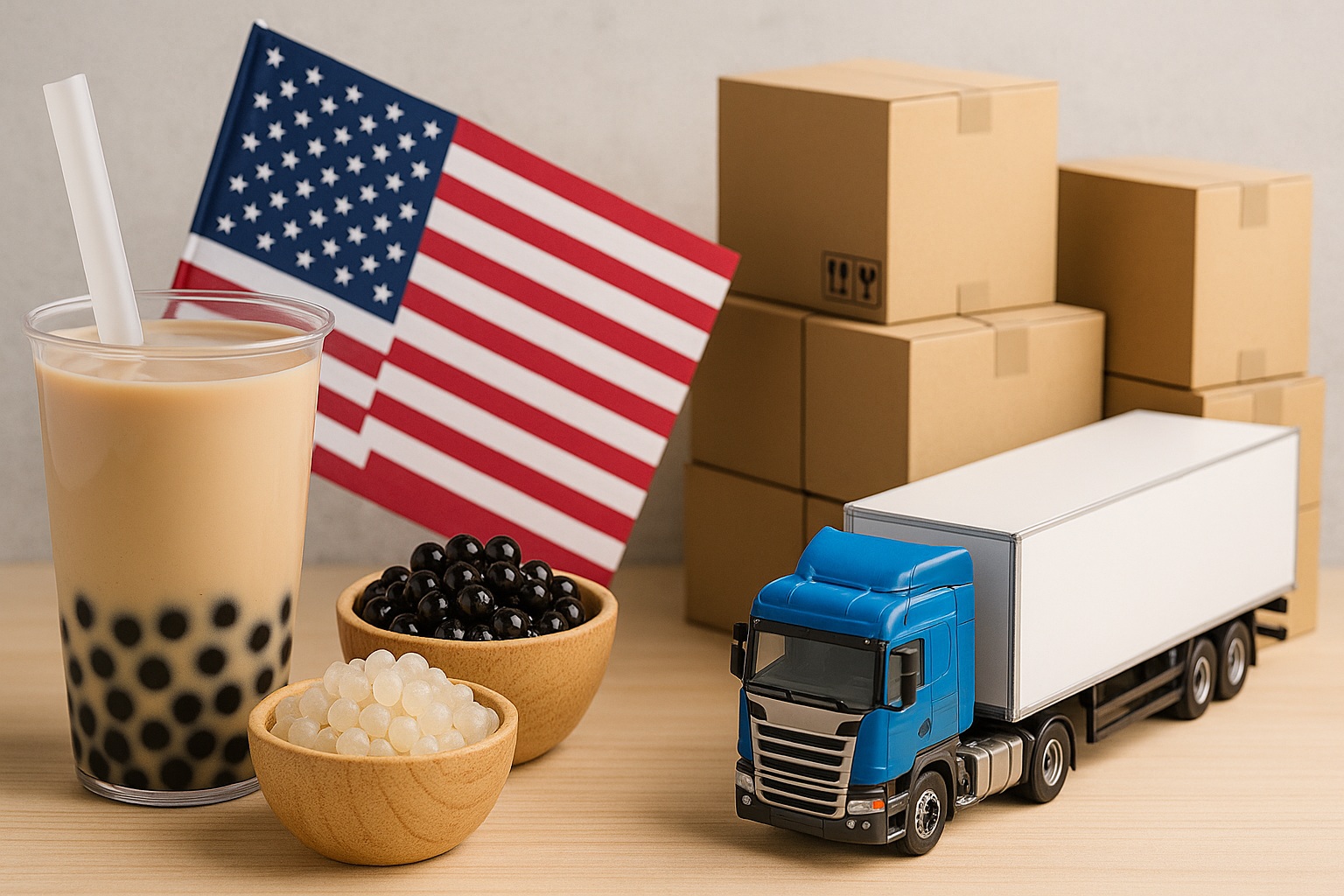
The bubble tea market in the United States continues to grow rapidly, driving demand for tapioca pearls, flavored powders, syrups, toppings, and packaging sourced from Asia. However, exporting these ingredients to the U.S. requires strict compliance with food import regulations, customs procedures, documentation standards, and updated tariff rules.
This guide summarizes the key requirements every bubble tea manufacturer, supplier, and distributor should understand before shipping goods to the American market.
1. Understanding U.S. Food Import Regulations
U.S. food imports are regulated primarily by:
-
FDA (Food and Drug Administration)
-
CBP (U.S. Customs and Border Protection)
-
USDA (for specific agricultural items)
For most bubble tea ingredients—such as tapioca pearls, fruit syrups, nondairy creamers, and flavored powders—the FDA plays the central role.
1.1 FDA Facility Registration (Biennial Renewal Required)
Any foreign manufacturer producing food for the U.S. market must register with the FDA.
Key points include:
-
Renew every two years during the FDA renewal period
-
Registration must include a U.S.-based FSVP importer
1.2 FSVP (Foreign Supplier Verification Program)
All U.S. buyers must ensure that foreign suppliers comply with U.S. food safety standards.
Exporters must be ready to provide:
-
HACCP / ISO / GMP certificates
-
Product testing results (microbial, heavy metals, pesticide residues where applicable)
-
Full ingredient lists and allergen declarations
Failure to comply can result in shipment delays or refusal of entry.
2. Required Documents for U.S. Import Clearance
A successful shipment typically includes the following:
2.1 Commercial Invoice
-
Accurate product descriptions
-
Unit price
-
Total value
-
Country of origin
Descriptions should not be vague—e.g., “tapioca starch-based pearls” instead of simply “food items.”
2.2 Packing List
-
Carton quantity
-
Weight (net & gross)
-
Dimensions
2.3 Bill of Lading or Air Waybill
2.4 FDA Prior Notice
Must be submitted before goods arrive in the U.S.
2.5 Certificate of Analysis (COA)
Recommended for powders, creamers, syrups, and tapioca pearls to speed up inspection.
2.6 Label Compliance
U.S. labeling rules require:
-
English-language labels
-
Nutrition facts (if prepackaged)
-
Allergen declaration
-
Manufacturer name & address
-
Net weight in both metric & U.S. units
3. HTS Codes & Tariff Rates for Common Bubble Tea Ingredients
Tariffs vary depending on product classification. Common HTS codes include:
| Product | Typical HTS Code | Notes |
|---|---|---|
| Tapioca Pearls | 1903.00 | Often duty-free or low duty |
| Powdered Drink Mix / Flavored Powders | 2101 / 2106 | Duty varies by formulation |
| Fruit Syrups | 2106.90 | May require additional documentation |
| Tea Leaves / Instant Tea | 0902 / 2101 | Depends on level of processing |
| Plastic Straws / Cups | 3924 / 3923 | Higher duties possible |
| Paper Straws / Cups | 4823 | Eco-friendly alternatives typically face lower tariffs |
Tariff rates can change depending on U.S. trade policies, origin country, or additional duties such as Section 301 tariffs.
4. Common Challenges When Exporting to the U.S.
4.1 Incomplete or Incorrect Product Descriptions
Generic descriptions often trigger customs inspections.
Clear, accurate details reduce risk.
4.2 Missing FSVP Importer
Shipments cannot clear without a designated U.S. FSVP partner.
4.3 Labels Not Meeting U.S. Standards
Especially for:
-
Non-dairy creamer
-
Flavored powders
-
Premixed drink bases
Incorrect labels may require relabeling at port, causing additional fees.
4.4 High Duties on Packaging Materials
Many suppliers overlook the cost impact of:
-
Plastic cups
-
PET bottles
-
Sealing films
Always classify these separately to avoid mis-declaration penalties.
5. Practical Tips for Smoother Customs Clearance
5.1 Use Accurate and Consistent HTS Codes
Misclassification may cause:
-
Delays
-
Higher duties
-
Customs fines
5.2 Provide COAs and Safety Documents Proactively
Especially when exporting:
-
Creamers
-
Powders
-
Syrups
Providing documents upfront helps reduce FDA sampling.
5.3 Work Closely With a Licensed Customs Broker
Brokers ensure:
-
Proper tariff calculation
-
Compliance with FSVP
-
Avoidance of detention or “FDA red flag” issues
5.4 Consider Shipping in Mixed Pallets Carefully
Mixed SKUs must be clearly listed; otherwise, delays are common.
5.5 Prepare for Random FDA Sampling
This is normal.
Good documentation and clean COAs help minimize delays.
6. Outlook for the U.S. Bubble Tea Market
With boba tea shops expanding across major cities—New York, Los Angeles, Houston, Chicago—U.S. demand for imported ingredients continues to rise. Stable supply chains, compliant labeling, and predictable customs procedures will become increasingly important for suppliers aiming to serve large buyers, distributors, and franchise groups.
Contact Us
If you need professional assistance with exporting bubble tea ingredients to the United States—such as documentation review, labeling preparation, or understanding HTS tariff classifications—our team is ready to support you with accurate, up-to-date information.
Contact us to discuss your requirements and explore how we can help streamline your U.S. export process.