
NEWS & EVENTS

Why Taiwanese Bubble Tea Ingredients Stand Out: Key Differences from Chinese Suppliers
December 11,2025
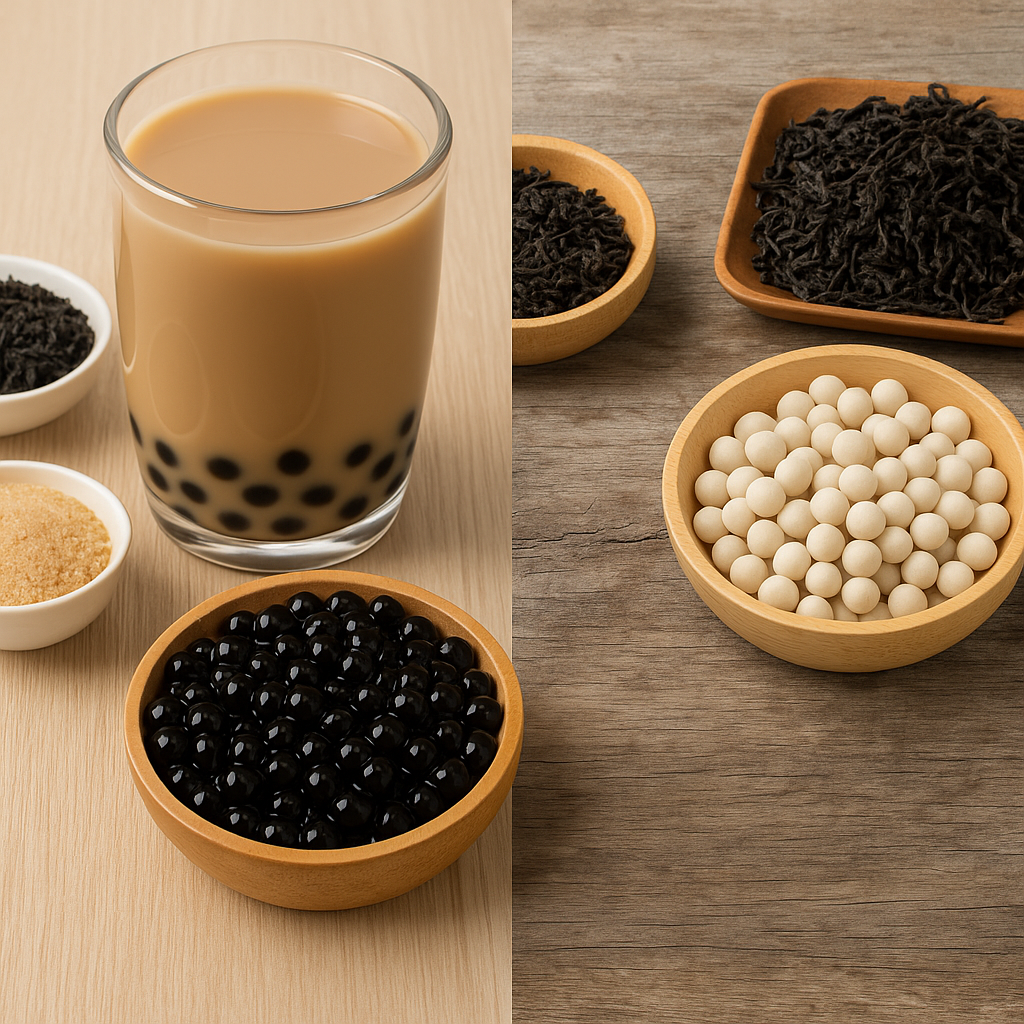
The global bubble tea market has grown rapidly over the past decade, reaching an estimated USD 4.2–4.5 billion in 2023, with projections exceeding USD 7–8 billion by 2030. As demand expands across North America, Europe, the Middle East, and South Asia, the reliability of raw material suppliers has become a critical factor for brand owners, importers, and OEM manufacturers.
Currently, Taiwan and China are the two primary production hubs for bubble tea ingredients. While both offer scale and variety, their regulatory systems, food safety standards, and supply chain maturity differ significantly. This article presents a data-driven comparison to help procurement teams make informed sourcing decisions.
1. Food Safety & Regulatory Enforcement: Taiwan Demonstrates Higher Transparency
1.1 Differences in Regulatory Structure
| Indicator | Taiwan | China |
|---|---|---|
| Mandatory GMP / HACCP for food factories | Yes | Not always mandatory |
| National batch-level traceability system | Fully implemented | Province-dependent; inconsistent execution |
| Annual food inspection volume | 40,000+ inspections (TFDA) | Large scale but varies by local government |
| Public reporting of violations | Highly transparent; real-time updates | Reporting varies; lower transparency |
According to the Taiwan Food and Drug Administration (TFDA), over 90% of food safety violations are publicly disclosed in real time, allowing importers to assess risk quickly. China’s decentralized reporting system results in varying levels of visibility, depending on the province.
1.2 International Safety Alerts (RASFF Data)
EU RASFF (Rapid Alert System for Food & Feed) statistics from 2019–2024 show:
-
China recorded 5–7× more alerts related to food safety than Taiwan.
-
China’s common issues: excessive preservatives, pesticide residues, undeclared additives, or industrial-grade adulterants.
-
Taiwan’s alerts were primarily labeling-related, not safety-related.
This difference in risk profile is a key factor for markets requiring strict compliance (EU, GCC, Australia, Canada).
2. Ingredient Quality: Taiwan Leads in Tea, Tapioca Pearls, Milk Bases, and Syrups
2.1 Tea (Oolong, Black Tea, Green Tea)
Taiwan is globally recognized for high-mountain tea production.
| Quality Indicator | Taiwan | China |
|---|---|---|
| Pesticide detection rate (2023) | 0.4% (CAFTEA) | 3–6% depending on region |
| Flavor consistency | High | Varies by factory & farm |
| International awards | Frequent | Region-specific |
For brands seeking stable fragrance, controlled bitterness, and repeatable extraction results, Taiwanese tea offers a more consistent profile.
2.2 Tapioca Pearls (Boba)
Taiwan is the world’s largest producer of high-quality tapioca pearls, exporting over 32,000 tons in 2023.
| Indicator | Taiwan | China |
|---|---|---|
| Core composition | Cassava starch + brown sugar | May include fillers, synthetic binders |
| Expansion variance (cooking) | 5–7% | 10–20%, affecting SOP |
| Shelf-life stability | High | Inconsistent; oxidation reported in some batches |
| Batch consistency | Very stable | Factory-dependent |
The famous “Q” texture associated with bubble tea largely originates from Taiwanese production techniques and controlled starch ratios.
2.3 Creamer, Milk Powder & Cheese Foam Ingredients
-
Taiwan primarily uses New Zealand and Australian dairy bases, which are globally recognized for safety.
-
China uses a mix of domestic and imported dairy. Historic food safety scandals (e.g., melamine in 2008) still influence buyer perception despite regulatory improvements.
2.4 Syrups & Fruit Concentrates
Industry data shows clear differences in juice concentration:
| Product | Taiwan (average) | China (average) |
|---|---|---|
| Passion fruit syrup juice content | 15–25% | 3–10% |
| Strawberry jam with real fruit pieces | 20–30% | 5–15% |
Higher concentration directly affects cup cost, flavor intensity, and recipe consistency.
3. Supply Chain Reliability: Taiwan Shows Greater Stability in Export Markets
3.1 Export Documentation & Compliance
Taiwanese suppliers generally provide complete compliance documentation required by international markets:
-
Certificate of Origin
-
Health Certificate
-
COA (Certificate of Analysis)
-
Food-contact packaging reports
-
Halal / ISO / HACCP certifications
Some Chinese suppliers meet these requirements, but documentation quality varies more widely.
3.2 Batch Consistency and Risk Control
Third-party supply chain assessments (2022–2024) show:
-
Taiwan consistency rate: 85–92%
-
China consistency rate: 60–75%
For franchise networks, consistency is not optional—it directly impacts training cost, customer experience, and brand reputation.
4. Why Global Bubble Tea Brands Prefer Taiwanese Ingredients
Based on the analysis above, Taiwan offers three strategic advantages:
1. Strong, transparent food safety ecosystem
Lower risk for cross-border importers; easier compliance for strict markets.
2. Higher and more stable ingredient quality
Tea, pearls, syrups, and dairy bases consistently outperform in flavor and batch reliability.
3. Mature export experience
Reduced customs delays, complete documentation, and predictable production schedules.
These factors explain why major global bubble tea chains continue to select Taiwan as their primary raw material source despite price competitiveness from China.
Contact Us – Start Your Sourcing Consultation
If you are looking for:
-
Reliable bubble tea ingredient supply
-
Multi-market compliance support
-
OEM/ODM development
-
Quality evaluation for your current suppliers
We are ready to assist your procurement team.