
NEWS & EVENTS

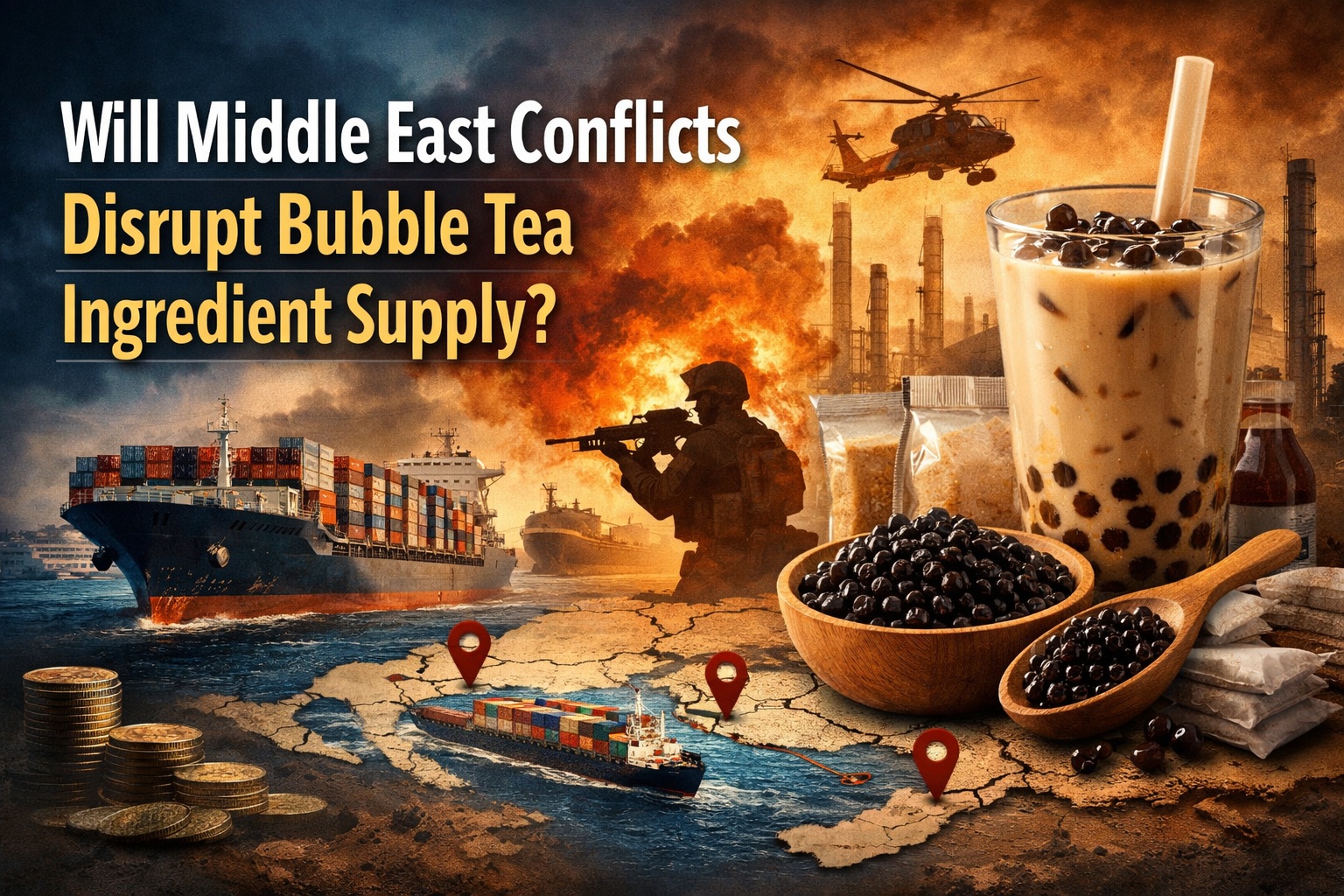
Will Middle East Conflicts Disrupt Bubble Tea Ingredient Supply?
March 20,2026
Rising Uncertainty in Global Trade
In recent years, geopolitical tensions in the Middle East have raised concerns across global industries. From energy markets to international logistics, disruptions in this region often ripple through worldwide supply chains. For businesses involved in food and beverage imports, including bubble tea ingredients, these developments can create uncertainty around cost, delivery timelines, and supply reliability.
For bubble tea importers, the key question is not whether global conflicts matter—but how they impact the consistency and predictability of ingredient supply.
How Middle East Conflicts Affect Global Supply Chains
While the Middle East is not a direct production hub for bubble tea ingredients, it plays a critical role in global shipping routes. As a result, disruptions in this region can significantly affect logistics between Asia and key markets such as Europe.
Strategic Shipping Routes Under Pressure
The Red Sea and the Suez Canal are among the most important maritime corridors in the world. A large portion of trade between Asia and Europe passes through these routes. When conflicts escalate, shipping companies may avoid these areas due to safety concerns, leading to rerouting.
Increased Freight Costs and Insurance Risks
When vessels are forced to detour around the Cape of Good Hope, transit distances increase substantially. This results in higher fuel consumption, elevated freight rates, and increased insurance premiums. These additional costs are often passed on to importers.
Delays and Schedule Uncertainty
Longer routes also mean extended delivery times. What was once a 30–40 day shipment may become 50–70 days or more. In addition, shipping schedules become less predictable, making planning more difficult for businesses relying on timely inventory replenishment.
In most cases, disruptions are not caused by production shortages—but by logistical challenges.
Impact on Bubble Tea Ingredient Supply
Understanding how these global disruptions translate into the bubble tea industry is essential for importers and distributors.
Tapioca Pearls – Shelf Life and Timing Risks
Tapioca pearls are one of the most sensitive products in the bubble tea supply chain. Compared to other dry ingredients, they often have a shorter shelf life and are more vulnerable to extended transit times. Delays can increase the risk of reduced product quality or even spoilage upon arrival.
Powder Mixes and Syrups – Bulk Shipping Challenges
Powdered ingredients and syrups are generally more stable and less time-sensitive. However, they are typically shipped in bulk, meaning delays can disrupt entire inventory cycles. Businesses may face stock shortages if shipments do not arrive as scheduled.
Packaging and Private Label Orders
Custom packaging and private label products depend heavily on precise delivery timelines. Any delay in shipping can impact product launches, marketing campaigns, and retail availability, especially for businesses entering new markets.
Will Supply Be Disrupted or Just Delayed?
Despite these challenges, it is important to distinguish between supply disruption and logistical delay.
Production of bubble tea ingredients—especially in Taiwan and other parts of Asia—remains stable. Manufacturers continue to operate with consistent output and quality standards.
However, logistics has become the primary bottleneck. Shipping delays, fluctuating costs, and route uncertainties are the main issues affecting importers.
At the same time, cost volatility has become a growing concern. Businesses may experience sudden increases in freight expenses, making it harder to maintain stable pricing.
In most cases, supply is not disappearing—it is becoming more complex to manage.
How Long Could the Disruption Last? (2026 Outlook)
The duration of these disruptions depends on how geopolitical tensions evolve. Importers should consider multiple scenarios rather than relying on a single forecast.
Short-Term Disruption (1–3 Months)
If tensions ease quickly, shipping routes may stabilize, and logistics operations could return to normal within a short period. Freight rates may also gradually decline.
Medium-Term Instability (3–12 Months)
In a prolonged but contained conflict scenario, shipping routes may remain partially disrupted. Costs could stay elevated, and transit times may continue to fluctuate.
Long-Term Structural Shift (1+ Year)
If instability persists, the global supply chain may undergo structural changes. Importers may adopt multi-supplier strategies, and logistics networks may permanently adjust to alternative routes.
Rather than expecting a quick resolution, businesses should prepare for ongoing volatility.
What Bubble Tea Importers Should Do Now
To manage risks effectively, importers can take proactive steps to strengthen their supply chain resilience.
Build Safety Stock
Relying solely on just-in-time inventory strategies is increasingly risky. Maintaining buffer stock can help prevent disruptions caused by delayed shipments.
Plan Orders Earlier
Extending planning timelines by several weeks—or even months—can reduce the impact of unpredictable shipping schedules.
Diversify Supply Sources
Working with multiple suppliers in different regions can help mitigate the risk of over-dependence on a single source.
Work with Experienced Exporters
Suppliers with strong export experience are better equipped to handle documentation, logistics coordination, and unexpected disruptions.
Choosing a Reliable Bubble Tea Supplier During Global Uncertainty
In times of uncertainty, choosing the right supplier becomes more important than ever.
Reliable bubble tea suppliers should offer:
-
Stable production capacity
-
Consistent product quality
-
Experience in international shipping and export regulations
-
Flexibility in order planning and adjustments
Partnering with experienced suppliers can help reduce uncertainty and ensure a more consistent supply of ingredients, even when global conditions are unstable.
Conclusion – Stability Becomes the New Competitive Advantage
Middle East conflicts are unlikely to directly halt the production of bubble tea ingredients. However, they can significantly reshape the logistics and cost structure of global trade.
For importers, the key challenge lies in navigating delays, managing costs, and maintaining reliable supply chains.
In this environment, stability becomes a critical competitive advantage. Businesses that prioritize resilient supply chains and strong supplier partnerships will be better positioned to adapt and grow—even in uncertain times.
If you are currently reviewing your supply chain strategy or looking to reduce risk in your bubble tea ingredient sourcing, working with a reliable and export-focused supplier can make a significant difference.