
NEWS & EVENTS

How the Middle East War Is Affecting Bubble Tea Costs and Supply Chains
March 18,2026
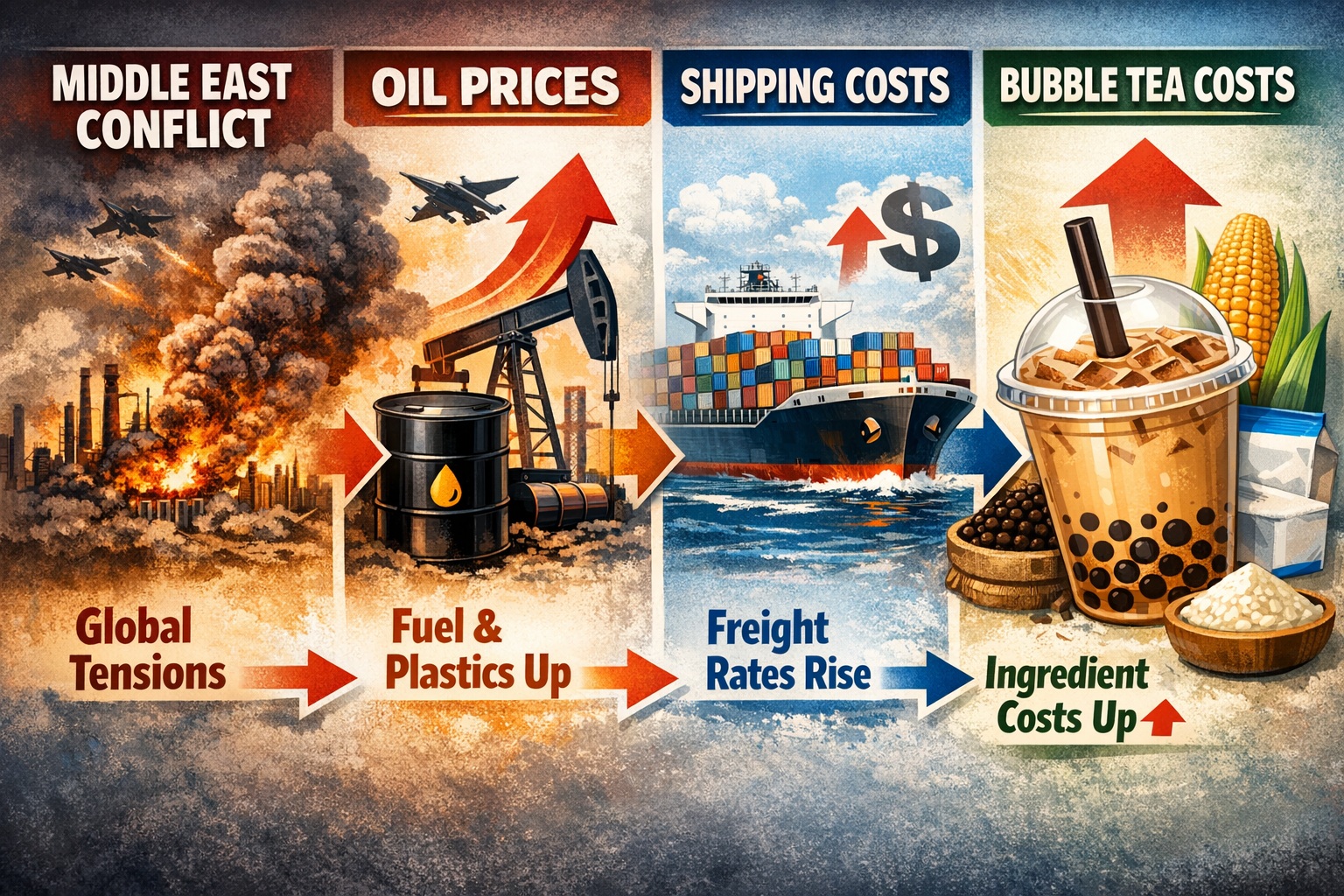
The ongoing conflict in the Middle East is no longer just a geopolitical issue.
It is increasingly becoming a direct cost driver for global supply chains, including the bubble tea industry.
For businesses sourcing bubble tea ingredients, the impact is already visible — and accelerating.
This may not be the cheapest moment to purchase.
However, it could be one of the last relatively stable windows before further volatility occurs.
Why Timing Matters: 3 Immediate Risks for Bubble Tea Buyers
1. Production Lead Time Increases Cost Exposure
Most bubble tea ingredients — including tapioca pearls, powders, and syrups — require approximately 3–4 weeks for production after order confirmation.
During this period, raw material prices may continue to rise.
👉 This creates a gap between order placement and actual cost realization
Key insight:
Placing orders earlier allows buyers to lock in current pricing before further increases.
2. Supply Chain Disruptions Can Lead to Regional Shortages
Geopolitical conflicts often disrupt transportation routes and raw material availability.
As a result:
-
Certain regions may experience temporary shortages
-
Lead times may extend unpredictably
👉 Businesses with sufficient inventory gain a competitive advantage
👉 Those without stock may face delays or higher replacement costs
3. Current Prices May Not Fully Reflect Cost Pressure
At present, many upstream manufacturers and suppliers have not fully adjusted their prices.
However, this is typically due to a time lag between rising costs and market pricing.
👉 Once adjustments occur, they are often sudden and significant rather than gradual
Key Cost Drivers Behind the Bubble Tea Supply Chain
To understand the full impact, it is important to look at the four major factors currently affected by the Middle East conflict.
1. Oil Prices: Impact on Logistics and Packaging
Rising oil prices influence more than transportation fuel.
They directly affect:
-
International shipping costs
-
Inland logistics and delivery
-
Plastic-based packaging (cups, sealing film, inner bags)
For any bubble tea supplier or distributor, this means higher costs across both logistics and packaging materials.
2. Natural Gas: A Hidden Cost in Ingredient Production
Natural gas plays a critical role in food manufacturing processes.
It is widely used for:
-
Powder production (milk foam powder, creamers, flavor powders)
-
Drying and heating processes
-
General factory operations
As gas prices increase, manufacturers face immediate production cost pressure, which eventually transfers to buyers.
3. Corn: Indirect but Critical to Ingredient Economics
Although corn is not always a direct ingredient in bubble tea, it is essential to the broader food system.
It influences:
-
Starch-based ingredients
-
Glucose syrups and sweeteners
-
Processed ingredient formulations
More importantly, the cost transmission chain is as follows:
War → Energy disruption → Fertilizer cost increase → Higher agricultural costs → Rising corn prices → Increased food ingredient costs
This explains why even indirect commodities have a significant impact on bubble tea ingredient pricing.
4. Ocean Freight: Increasing Volatility in Global Shipping
The global shipping industry is already reacting to the current situation.
Key trends include:
-
Rising fuel surcharges
-
Route adjustments and diversions
-
Longer transit times
-
Increased pricing volatility
For importers and exporters of bubble tea ingredients, this leads to:
👉 Higher landed costs
👉 Reduced predictability in delivery schedules
The Real Challenge: Not Just Higher Costs, but Uncertainty
While rising prices are a concern, the more critical issue is reduced predictability.
Businesses may face:
-
Frequent price fluctuations
-
Extended lead times
-
Less stable supply conditions
For companies operating in the bubble tea supply chain, this creates planning challenges in both procurement and pricing strategy.
Industry Insight: Bubble Tea Is a Fully Integrated Global Supply Chain
The bubble tea industry depends on a complex, interconnected system:
Raw materials → Manufacturing → Packaging → Logistics → Distribution
Currently, the Middle East conflict is impacting all these layers simultaneously.
✔ Oil affects logistics and packaging
✔ Natural gas affects manufacturing
✔ Corn reflects agricultural cost pressure
✔ Freight determines final delivery costs
This is not a single isolated issue — it is a system-wide disruption.
Conclusion: A Narrow Window for Cost Stability
The current market situation suggests:
-
Prices may continue to rise
-
Supply chains may become less predictable
-
Cost volatility may increase
This is not necessarily the lowest-cost moment.
But it may be one of the last relatively stable opportunities before further adjustments occur.
Planning Ahead: Securing Supply in an Uncertain Market
For businesses sourcing bubble tea ingredients, early planning is becoming increasingly important.
📩 If you are planning your orders or reviewing your sourcing strategy, acting early can help secure supply and stabilize costs before further fluctuations.