
NEWS & EVENTS

Why Your Bubble Tea Menu Isn't Selling
March 23,2026
The Real Reason Your Menu Isn't Performing
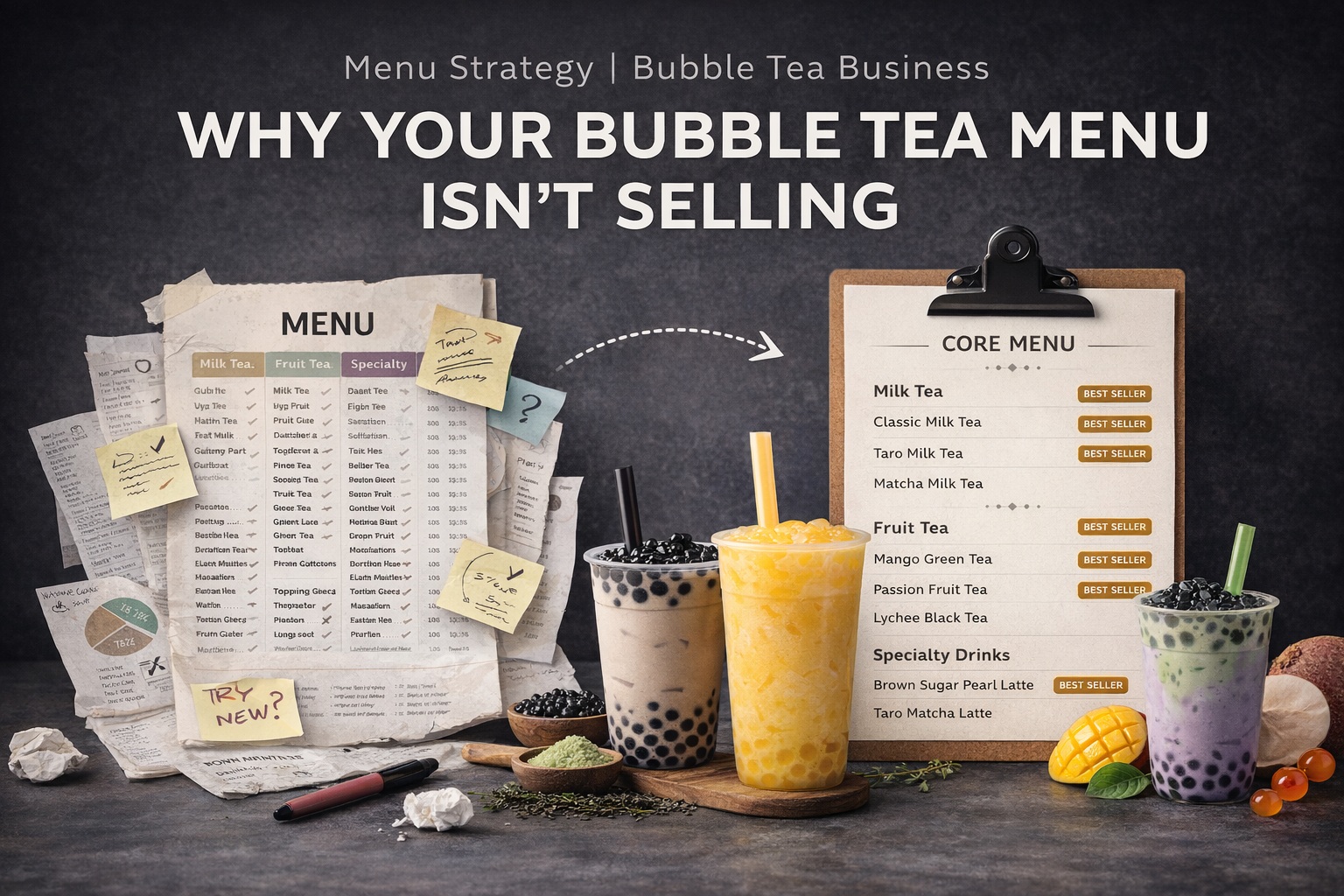
Many bubble tea businesses assume that low sales are caused by poor marketing, pricing, or location. In reality, the issue often lies deeper — in the structure of the menu itself.
It's common to see menus filled with dozens of drink options, yet only a handful generate consistent orders. This imbalance creates operational inefficiencies, inventory waste, and missed profit opportunities.
A successful bubble tea menu is not defined by how many items it offers, but by how effectively it converts customer interest into repeat purchases.
Problem 1: Too Many Choices, No Clear Bestsellers
One of the most common mistakes is overloading the menu with too many options. While variety may seem attractive, it often leads to decision fatigue.
When customers are overwhelmed, they tend to:
- Delay their decision
- Default to the safest option
- Avoid trying new items
From a behavioral perspective, this aligns with Hick's Law, which states that the more choices available, the longer it takes to make a decision.
In high-performing bubble tea shops, the opposite approach is used. A small number of carefully selected drinks act as core bestsellers, driving the majority of revenue. In many cases, around 20% of the menu generates over 80% of total sales.
Without clearly defined bestsellers, a menu lacks direction — and without direction, it struggles to sell.

Problem 2: The Wrong Ingredient Strategy
A menu is only as strong as the ingredients behind it. Many businesses underestimate how ingredient selection directly impacts sales performance.
There are three key dimensions to consider:
1. Flavor Acceptance
Not all flavors perform equally across markets. While unique or experimental options may seem appealing, customers often prefer familiar and approachable profiles such as fruit-based drinks, classic milk teas, or well-known flavors like taro and matcha.
2. Consistency
Inconsistent taste or texture leads to customer dissatisfaction and reduces repeat purchases. This often results from unstable ingredient quality or complex preparation processes.
3. Cost Efficiency
Some menu items are expensive to produce but priced too low, reducing profitability. Others may have strong margins but are rarely ordered.
An effective ingredient strategy balances all three:
- Popular flavors that customers recognize
- Reliable quality across every batch
- Cost structures that support sustainable margins
Without this balance, even a visually appealing menu will struggle to perform.
Problem 3: Lack of Visual Appeal and Customization
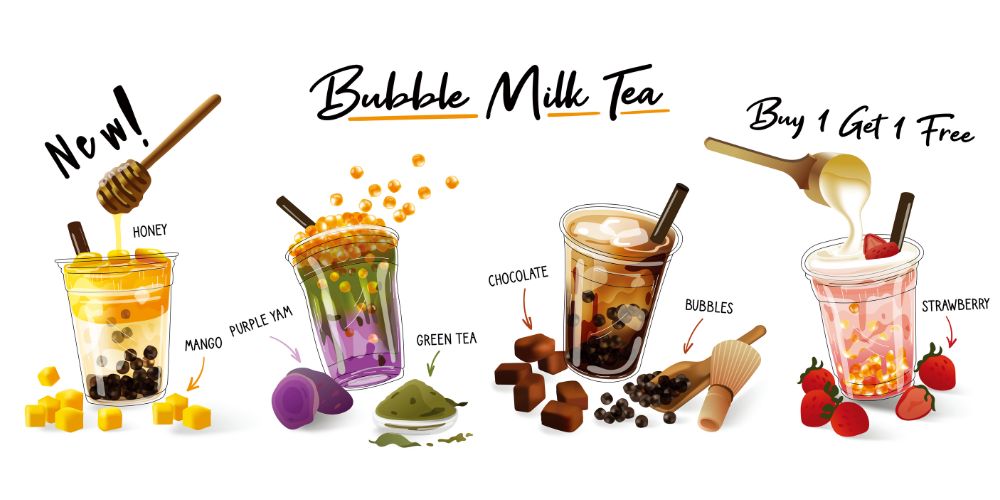
In today's market, especially with the influence of social media, visual appeal plays a critical role in driving sales.
Customers are more likely to purchase drinks that:
- Have vibrant colors
- Show clear layering or contrast
- Include interesting textures or toppings
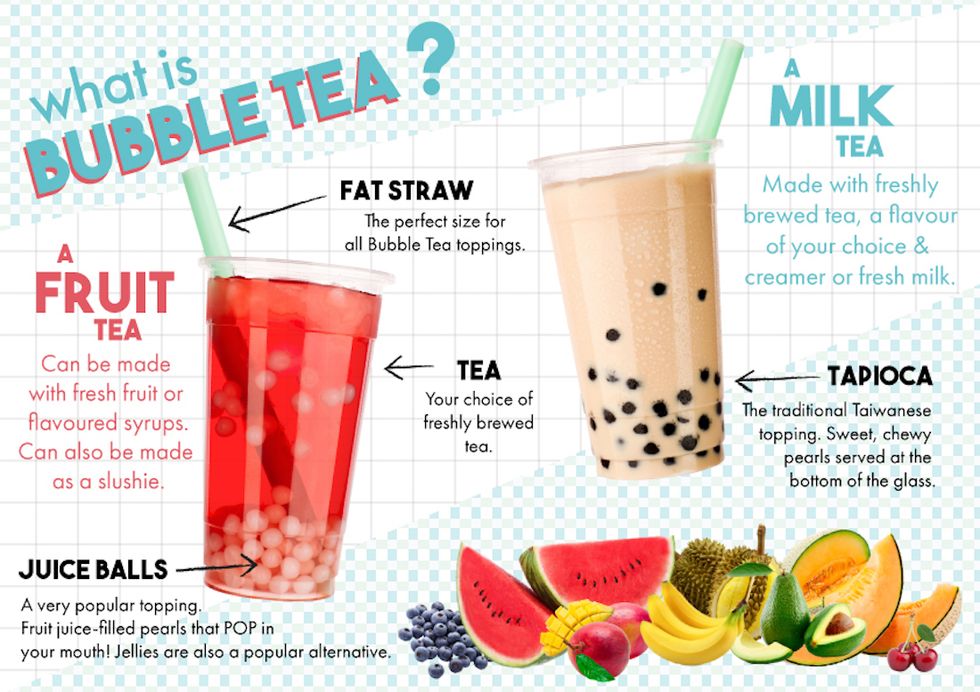
Beyond aesthetics, customization also impacts revenue. Toppings such as tapioca pearls, popping boba, and jellies are not just add-ons — they are key drivers of upselling.
When menus fail to highlight or integrate these elements effectively, they miss opportunities to:
- Increase average order value
- Encourage product exploration
- Enhance the overall customer experience
A drink that looks appealing is more likely to be shared, recommended, and reordered.
![Close-up view of clear boba tea with vibrant fruit popping boba bursting with flavors. Wallpaper [c1fe96880837454793df] by Wallpaper HD | WidgetClub](https://s.widget-club.com/images/YyiR86zpwIMIfrCZoSs4ulVD9RF3/945d8b7333ed2716801704c832b22fa6/759a5acd52d65870b16404c8d30dd81f.jpg?q=70&w=500)
Solution 1: Build a Core Menu Around Proven Bestsellers
Instead of expanding endlessly, focus on building a strong foundation.
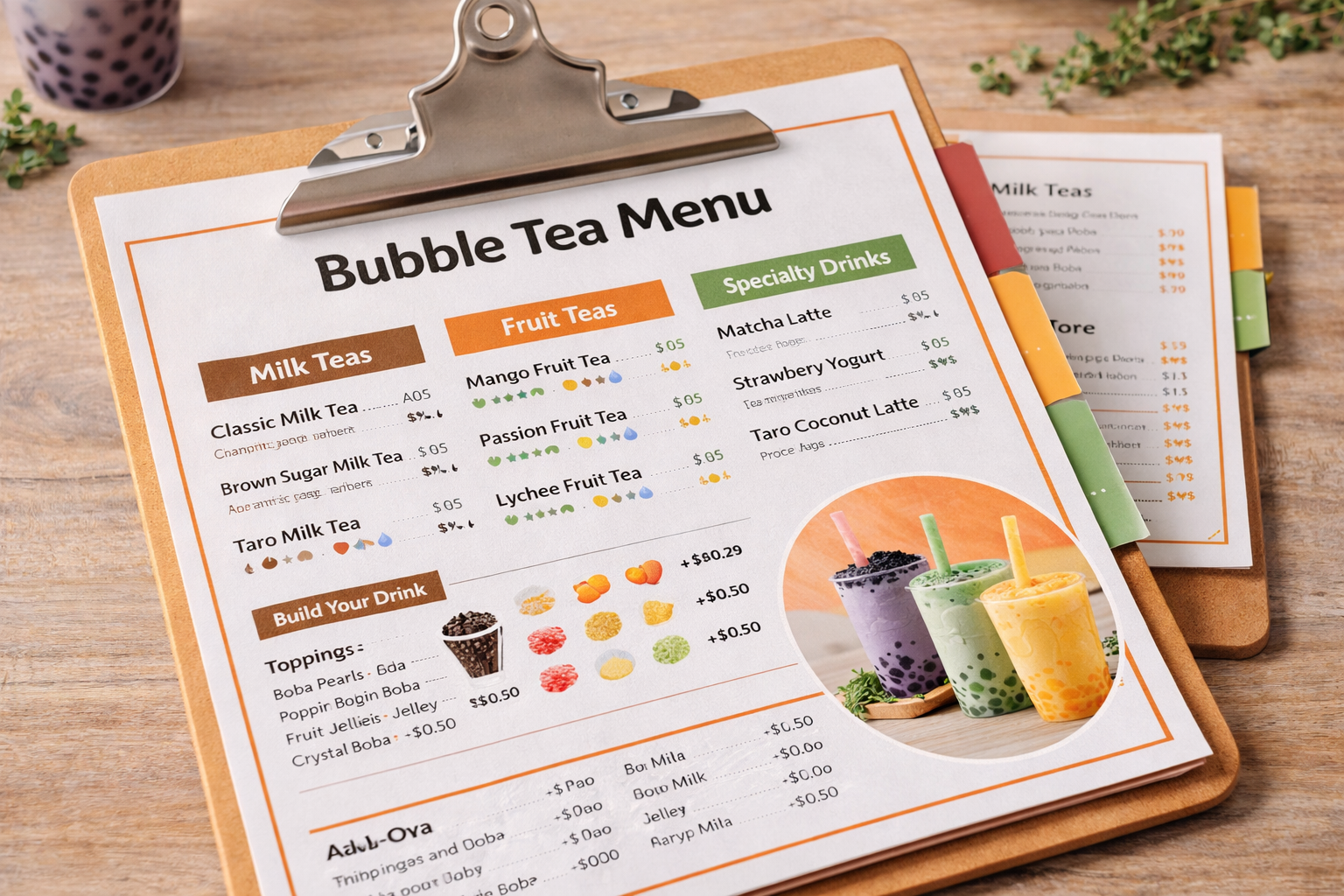
A well-structured menu typically includes:
- 5–8 core drinks that drive consistent sales
- Clear categories such as milk tea, fruit tea, and specialty drinks
- Variations built around proven flavor bases
For example:
- Fruit-based drinks using mango, passion fruit, or lychee
- Classic milk teas with balanced sweetness and tea strength
- Powder-based drinks such as taro or matcha, known for their stability and margin potential
These core items should be optimized for both taste and operational efficiency, forming the backbone of the business.
Solution 2: Design for Profit, Not Just Variety
Every item on the menu should serve a purpose. High-performing menus are designed strategically, not randomly.
A practical approach is to categorize drinks based on their role:
- Traffic drivers: Popular, familiar drinks that attract customers
- Profit generators: Items with strong margins, often using stable and cost-efficient ingredients
- Brand builders: Unique or visually distinctive drinks that create differentiation
Balancing these roles allows a menu to perform across multiple dimensions — attracting customers, generating profit, and strengthening brand identity.
Cost control also becomes more manageable when ingredients are standardized and reused across multiple drinks.
Solution 3: Use Toppings and Texture to Increase Sales
Toppings are one of the most effective tools for increasing revenue without significantly raising costs.
Different types of toppings serve different functions:
- Tapioca pearls: Provide a classic, chewy texture and are widely accepted
- Popping boba: Add visual appeal and flavor bursts, especially attractive to younger audiences
- Jellies: Offer a cost-effective way to diversify texture and enhance perceived value
By designing drinks that naturally incorporate toppings — rather than offering them as optional extras — businesses can increase both product appeal and average ticket size.
The key is to create combinations where toppings feel essential, not optional.
Solution 4: Standardization Is the Key to Scaling
Operational consistency is often overlooked, but it is critical for long-term success.
Without standardized recipes and processes:
- Drink quality varies between staff
- Training becomes more difficult
- Service speed decreases
A well-designed menu should be easy to execute. This means:
- Clear measurements and preparation steps
- Ingredients that perform consistently
- Recipes that can be replicated across locations
Standardization not only improves customer satisfaction but also enables scalability, whether expanding to multiple stores or entering new markets.
Conclusion: A Successful Menu Is Designed, Not Random
A bubble tea menu that performs well is not the result of trial and error — it is the outcome of deliberate design.
By addressing the core issues:
- Reducing unnecessary complexity
- Selecting the right ingredients
- Enhancing visual appeal and customization
- Structuring the menu for both sales and operations
Businesses can transform underperforming menus into reliable revenue drivers.
Ultimately, the difference between slow sales and consistent growth often comes down to one factor: how well the menu is built.
For many growing bubble tea businesses, optimizing a menu is not just about creativity, it requires the right balance of ingredients, structure, and operational efficiency.