
NEWS & EVENTS

How Store Design and Logo Branding Influence Customer Decisions
March 24,2026
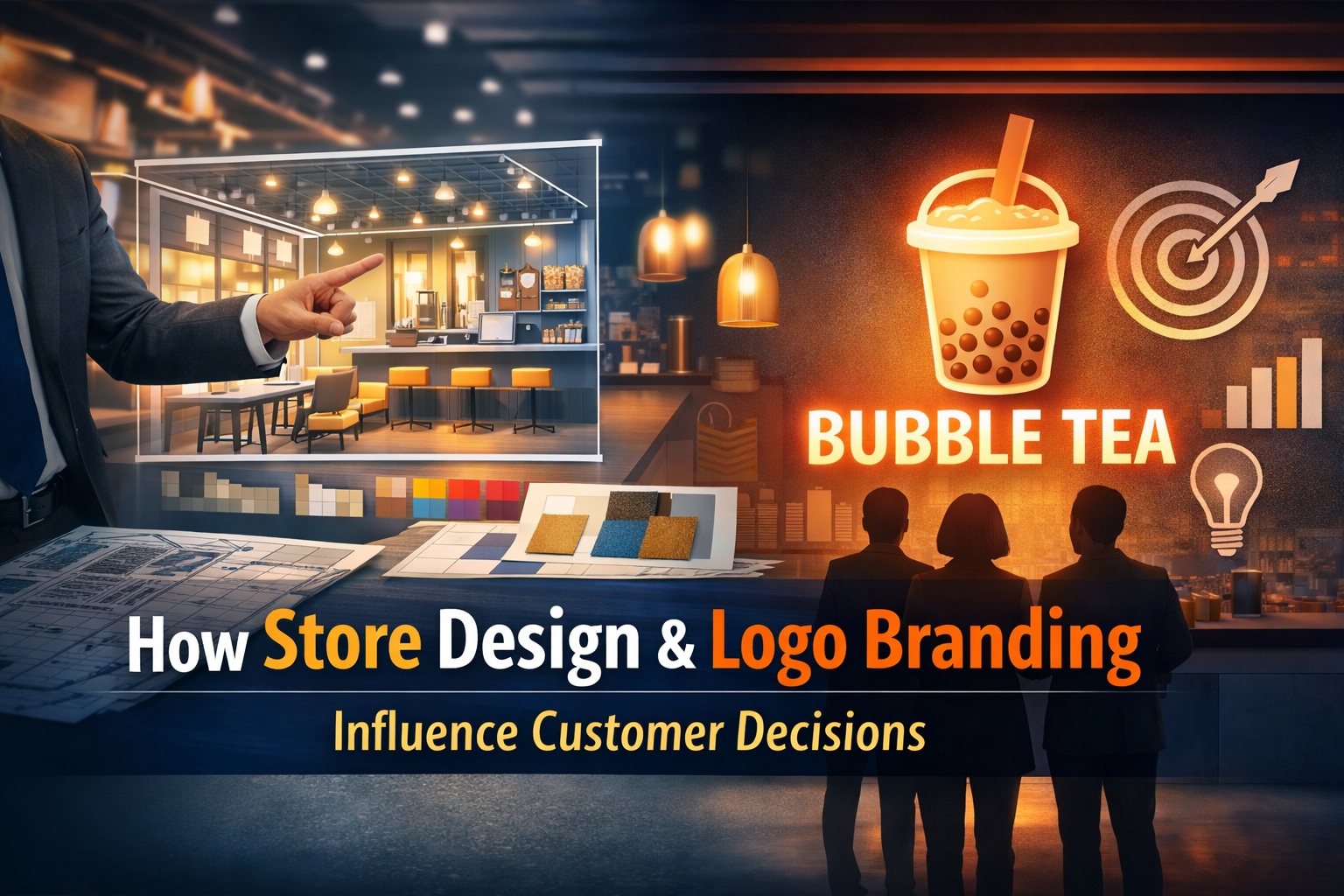
Why Some Stores Attract Customers Instantly While Others Don't
Many business owners face the same frustration:
“We invested in our store, but customer traffic is still low.”
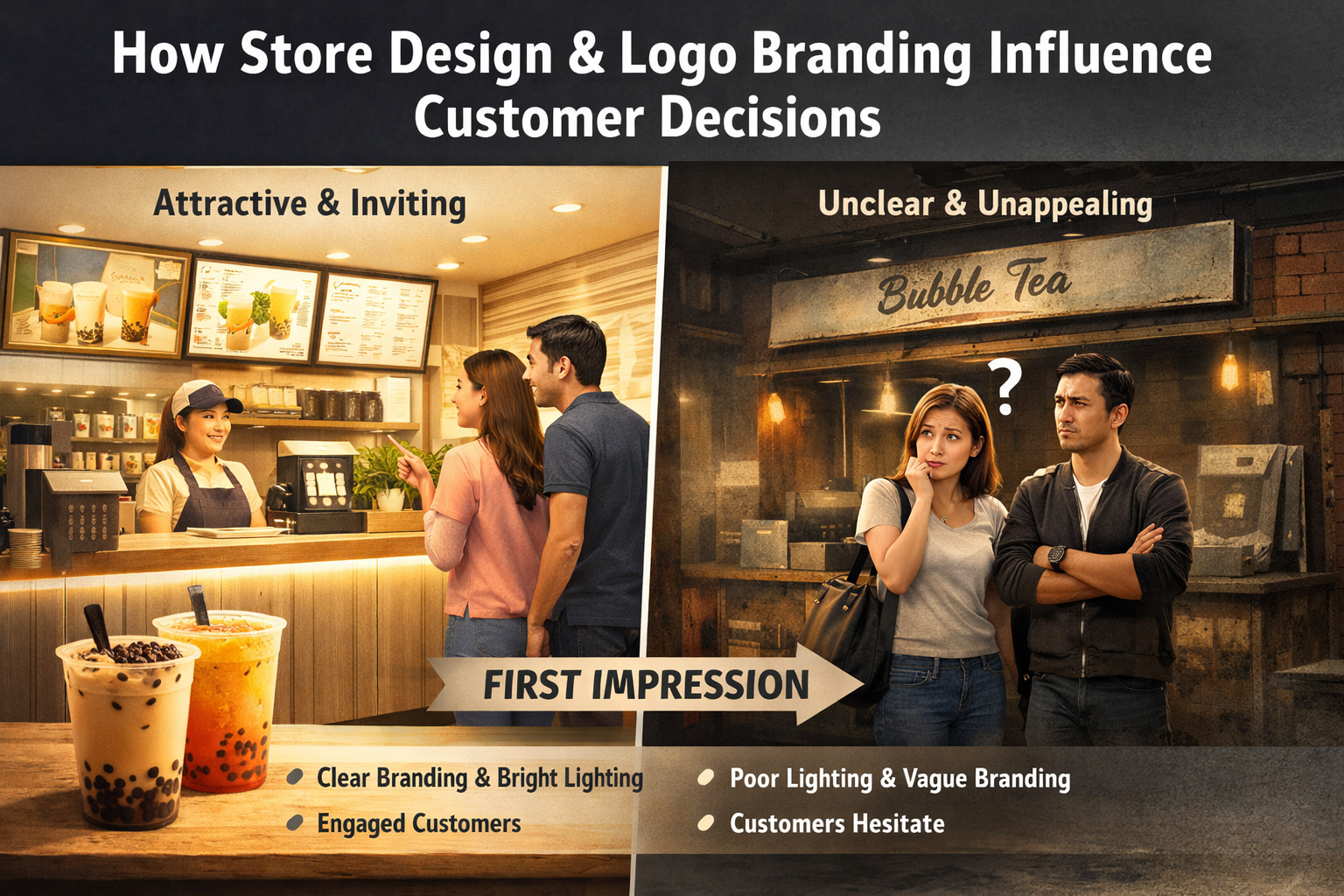
In most cases, the issue is not product quality or pricing—it is first impression failure.
Customers typically decide whether to enter a store within 3–5 seconds. If the visual environment does not clearly communicate value, clarity, and trust, they will simply walk past.
Common Problems Seen in New Stores
- The store looks “nice” but does not clearly show what is being sold
- Lighting is insufficient, making products appear less appealing
- Branding is inconsistent or forgettable
- Customers hesitate because they don’t immediately understand the offering
Practical Solution
Before optimizing products or marketing, evaluate this:
- Can a first-time passerby understand your business within 5 seconds?
- Does your storefront visually communicate quality and trust?
If the answer is no, improving store design and branding will often have a faster impact than adjusting pricing or promotions.
The Psychology Behind Store Design: From Aesthetics to Conversion
Store design directly influences customer behavior. It is not just about looking good—it is about reducing uncertainty and guiding decisions.
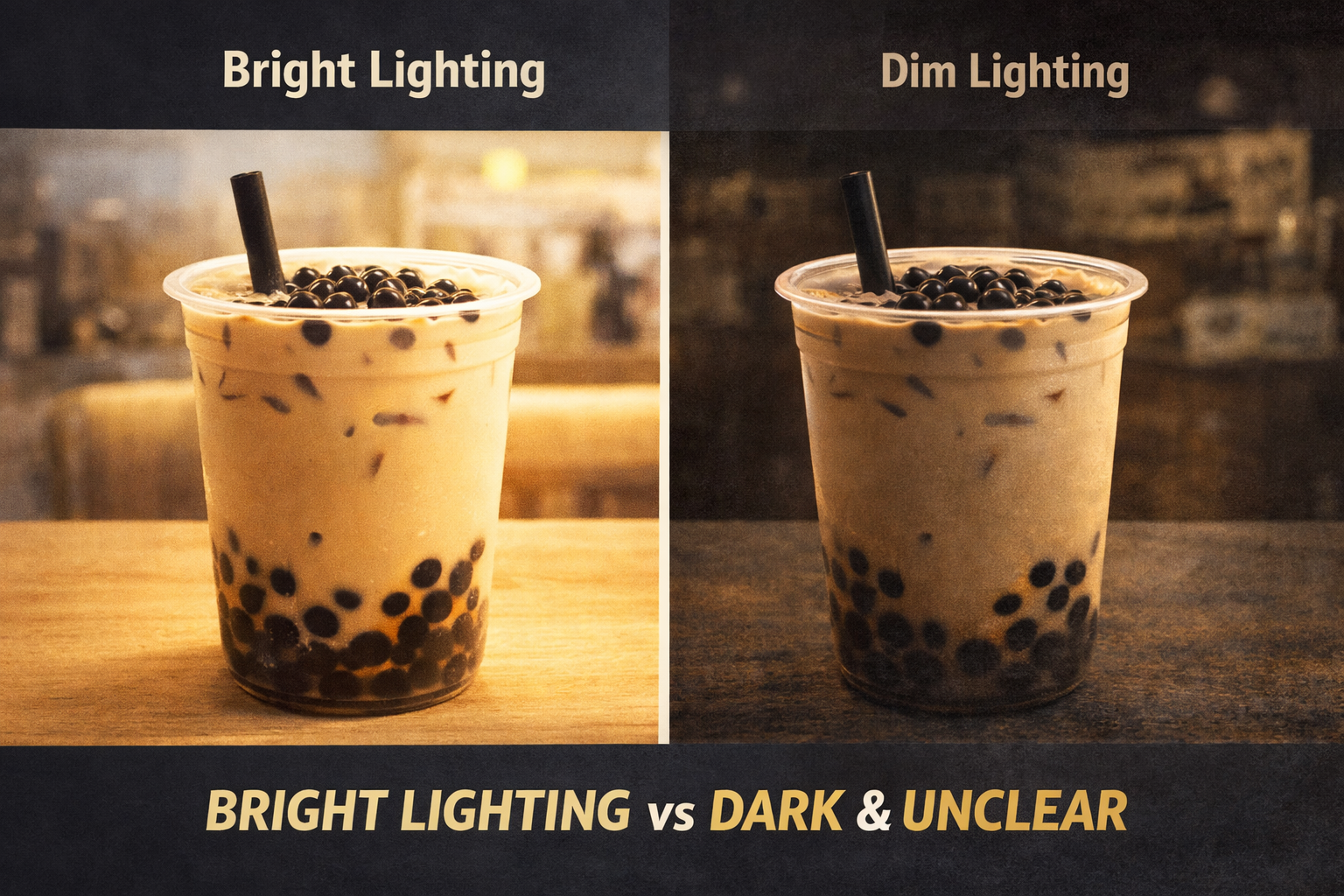
Lighting: How Brightness Directly Affects Entry Rate
Problem:
Many stores underestimate lighting, resulting in a space that feels dull or unclear.
Impact:
- Lower perceived cleanliness (critical in F&B)
- Reduced product visibility
- Shorter customer dwell time
Solution:
Implement layered lighting:
- Ambient lighting: Ensure overall brightness is consistent and sufficient
- Task lighting: Highlight key areas such as ordering counters and product displays
- Accent lighting: Emphasize textures, ingredients, or featured products
Practical Tip:
If your store looks significantly different between day and night, your lighting setup is likely insufficient.
Color and Material: Aligning Design with Brand Positioning
Problem:
Inconsistent or random design choices create confusion about brand identity.
Impact:
- Customers cannot quickly categorize your business
- Reduced trust due to unclear positioning
Solution:
Define your brand positioning first, then align design elements:
- Healthy / natural → wood, soft lighting, earthy tones
- Premium / modern → clean lines, neutral palette, metallic accents
- Youth-focused → bright colors, bold contrasts
Practical Tip:
Take a photo of your store and remove the logo.
If people cannot guess what type of business it is, your design lacks clarity.
Layout and Flow: Eliminating Friction in the Customer Journey
Problem:
Customers hesitate because they don’t know where to go or what to do.
Impact:
- Slower ordering process
- Reduced conversion rate
- Negative customer experience
Solution:
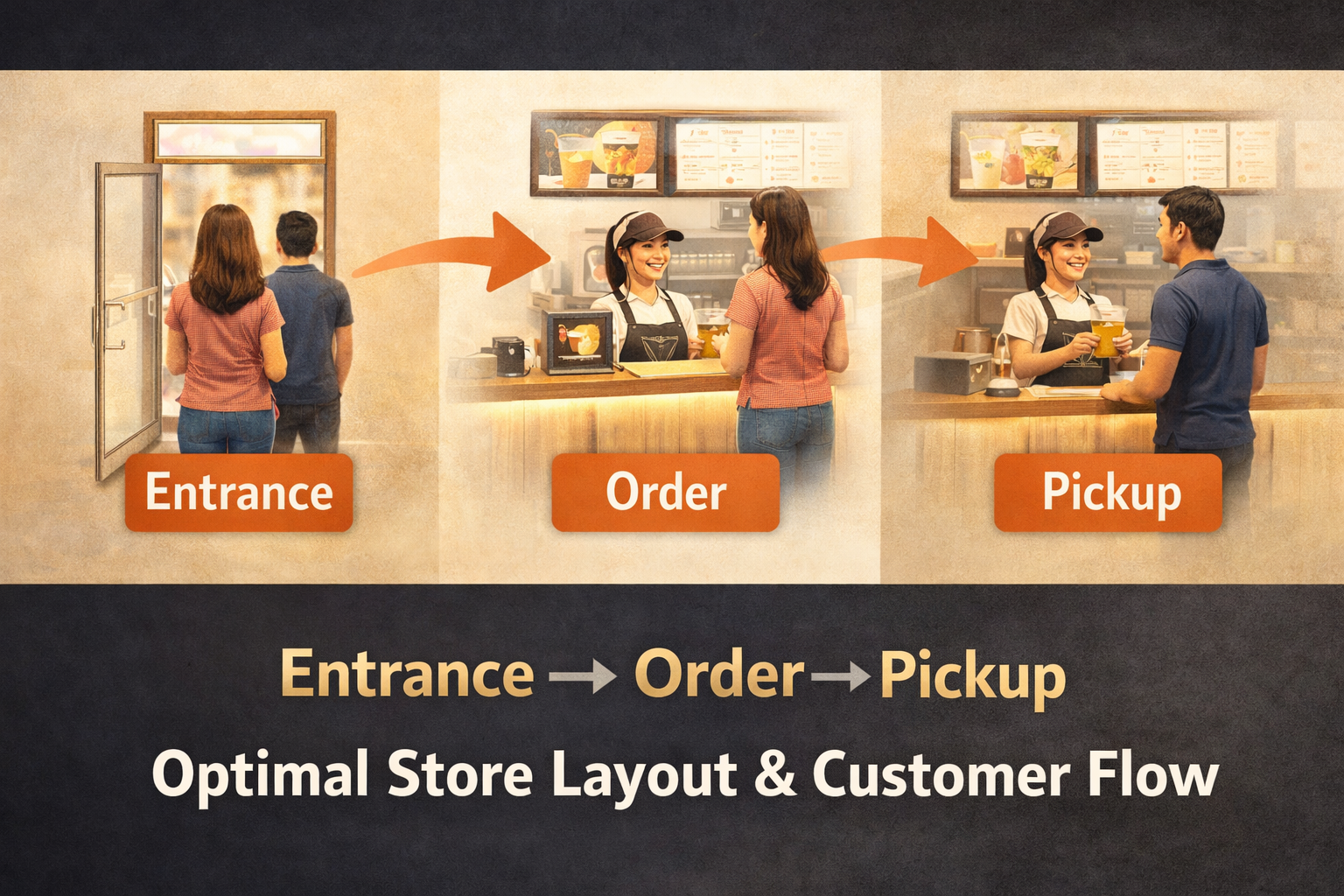
Design a clear visual flow:
- Entrance → immediate understanding of product
- Menu → easy to read within seconds
- Ordering point → clearly visible
- Pickup area → separated to avoid congestion
Practical Tip:
Observe first-time customers.
If they pause, look around, or ask basic questions, your layout needs improvement.
Logo Branding: Turning Recognition into Trust
While store design attracts attention, logo branding answers a critical question:
“What is this store, and can I trust it?”
Logo Clarity: Reducing Cognitive Load
Problem:
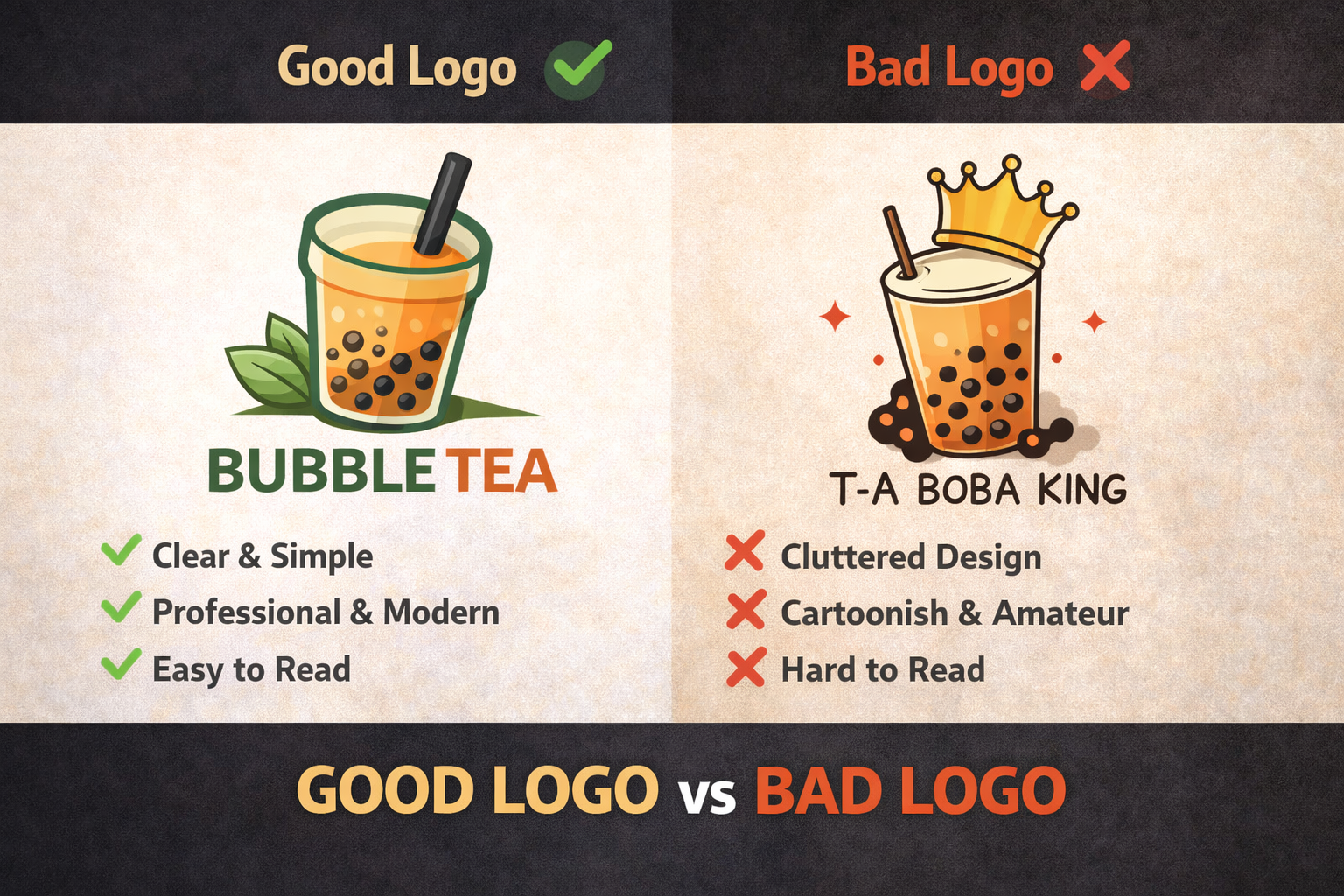
Overly complex or abstract logos confuse customers.
Impact:
- Slower recognition
- Reduced entry rate
- Lower brand recall
Solution:
Design for instant understanding:
- Use simple, recognizable shapes
- Ensure readability at a distance
- Align visual elements with your product category
Practical Tip:
If your logo is not recognizable within 2 seconds, it is too complex.
Consistency Across Touchpoints
Problem:
Mismatch between logo, store design, and packaging.
Impact:
- Weak brand identity
- Reduced customer memory
- Lower repeat visits
Solution:
Standardize visual elements:
- Same color palette across store and packaging
- Consistent typography
- Unified visual style across online and offline channels
Practical Tip:
Place your cup, logo, and store photo side by side.
If they look like different brands, consistency needs improvement.
Scalability: Designing for Future Growth
Problem:
Many logos work only in one format (e.g., signboard) but fail on packaging or digital platforms.
Impact:
- Redesign costs
- Inconsistent branding during expansion
Solution:
Test your logo in multiple scenarios:
- Small size (cup seal, labels)
- Large format (store signage)
- Digital use (social media icons)
Store Design + Logo = A Conversion System, Not Decoration
These two elements should function as a system:
- Store design → attracts attention and builds emotional appeal
- Logo branding → delivers clarity and reinforces identity
When aligned, they reduce decision friction and increase conversion.
Real-World Insight
Many stores fail not because they lack customers—but because they fail to convert passersby into visitors.
Improving visual clarity often leads to immediate increases in foot traffic without additional marketing spend.
Application in Bubble Tea and Beverage Businesses
In highly competitive markets like bubble tea, visual differentiation is critical.
Problem: High Competition, Low Differentiation
Customers are often choosing between multiple similar options.
Solution: Visual Clarity + Perceived Quality
Successful beverage stores typically share these characteristics:
- Bright, clean interiors that signal hygiene
- Visible preparation areas to build trust
- Clear product presentation to reduce decision time
Problem: Customers Hesitate When Menus Are Unclear
Solution:
- Use visual menus with product images
- Highlight best-selling items
- Simplify choices for first-time customers
Problem: Weak Branding Limits Growth
Solution:
- Develop a logo that can scale across locations
- Maintain consistent store design standards
- Build a recognizable visual identity early
Practical Checklist: A Quick Store Audit
Use this checklist to evaluate your current setup:
- Can customers identify your product within 5 seconds?
- Is your store bright and visually inviting at all times?
- Does your logo remain clear from a distance?
- Is your branding consistent across all touchpoints?
- Do customers feel confident entering your store without asking questions?
If multiple answers are “no,” addressing these issues can significantly improve performance.
Conclusion: Design Is a Revenue Driver, Not a Cost
Store design and logo branding are often underestimated because they are seen as aesthetic decisions.
In reality, they are business tools that directly impact:
- Customer entry rate
- Purchase decisions
- Brand recognition
- Long-term scalability
For businesses in competitive industries, especially food and beverage, improving visual clarity and branding is one of the most effective ways to increase performance—often without increasing operational costs.
If you're working on a new bubble tea concept or looking to improve your current store performance, you're welcome to get in touch for a quick discussion.
Whether it's product selection, store positioning, or overall brand direction, having a clear and aligned strategy from the beginning often saves both time and cost in the long run.