
NEWS & EVENTS

How the Arctic Shipping Routes Could Reshape Bubble Tea Supply Chains to Europe and North America
January 12,2026
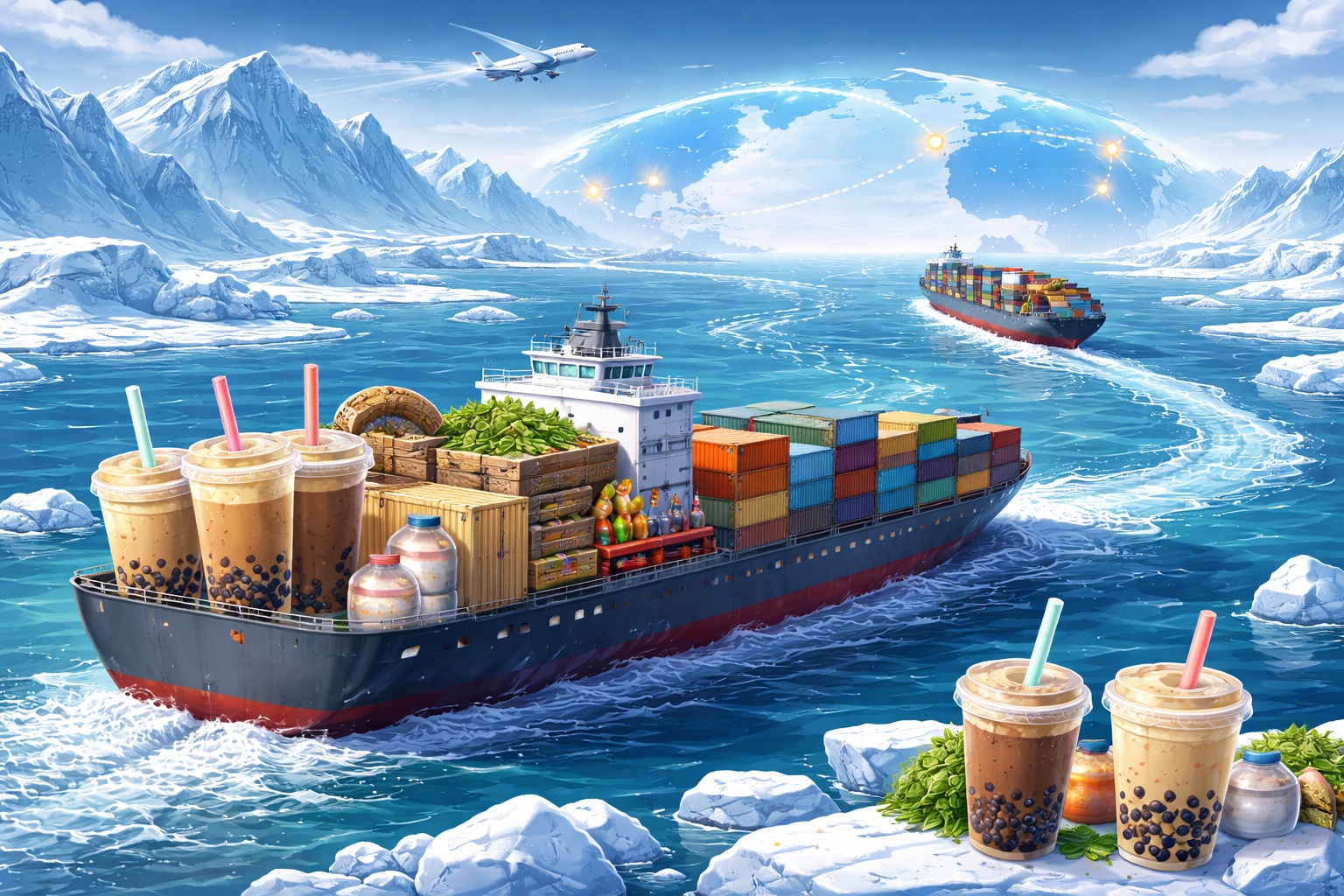
The global bubble tea industry has grown far beyond its Asian origins. Today, bubble tea ingredients—such as tapioca pearls, tea leaves, flavor powders, milk foam bases, syrups, cups, sealing films, and even machinery parts—are shipped regularly from Asia to Europe and North America.
Behind every cup served overseas lies a complex logistics system where shipping time, cost stability, and supply reliability play a critical role.
As global shipping faces repeated disruptions, the discussion around Arctic shipping routes has gradually moved from theory to practical consideration. If Arctic routes become commercially viable on a broader scale, they could introduce structural changes to how bubble tea supply chains operate worldwide.
Why Shipping Routes Matter to the Bubble Tea Industry
Unlike many fast-moving consumer goods, bubble tea ingredients are often highly sensitive to lead time and consistency:
-
Tapioca pearls and starch-based products have shelf-life constraints
-
Tea leaves and flavor powders require stable storage and predictable transit times
-
Seasonal demand spikes can quickly expose weaknesses in supply planning
Traditional shipping routes from Asia to Europe and North America mainly rely on the Suez Canal or longer detours around major capes. When congestion, geopolitical tension, or climate-related disruptions occur, the result is usually longer transit times, higher freight rates, and increased inventory pressure for importers.
For bubble tea brands and distributors, logistics uncertainty often translates into overstocking, delayed launches, or limited menu availability.
The Arctic Shipping Routes: A Shorter but Complex Alternative
Arctic shipping routes, particularly those connecting Northeast Asia to Northern Europe, offer a geographically shorter path compared to traditional routes. In theory, this could reduce sailing distances and transit time during navigable seasons.
However, Arctic routes also introduce new variables:
-
Seasonal accessibility depending on ice conditions
-
Higher requirements for vessel specifications and insurance
-
Limited port infrastructure compared to established trade lanes
For bubble tea supply chains, this means Arctic routes are unlikely to replace traditional shipping entirely. Instead, they may gradually become a supplementary option for specific lanes, seasons, or cargo priorities.
Potential Impact on Bubble Tea Ingredient Logistics
If Arctic routes become more stable and commercially accessible, several changes could emerge across the bubble tea industry:
Shorter Lead Times for Europe
For European markets, reduced sailing distances could help shorten replenishment cycles for core ingredients such as tapioca pearls, tea concentrates, and milk foam powders. This may allow importers to operate with leaner inventories while maintaining supply security.
Cost Structure Adjustments
While Arctic shipping is not inherently cheap, more route diversity can reduce over-reliance on single corridors. Over time, this may help smooth freight rate volatility—an important factor for bubble tea brands working with tight cost margins.
More Flexible Supply Chain Planning
With additional routing options, ingredient suppliers and distributors could adopt multi-route logistics strategies, balancing speed, cost, and risk rather than optimizing for price alone.
Long-Term Implications for Global Bubble Tea Expansion
In the long run, Arctic routes reflect a broader trend: supply chains are shifting from efficiency-only models toward resilience-focused design. For the bubble tea industry, this shift is especially relevant as brands expand into secondary European cities and emerging North American markets.
Reliable access to core ingredients is no longer just an operational issue—it directly affects brand consistency, menu standardization, and customer experience. Logistics decisions increasingly influence which suppliers are chosen and how partnerships are structured.
Preparing for a More Diversified Logistics Future
Arctic shipping routes may not transform bubble tea logistics overnight, but they signal an important direction. Ingredient suppliers and international buyers who understand these developments early will be better positioned to adapt their sourcing and distribution strategies.
A resilient bubble tea supply chain is built not only on quality ingredients, but also on predictable delivery, clear communication, and long-term planning.
Contact Us
If you would like to discuss bubble tea ingredients, export logistics, or supply chain planning for Europe and North America, feel free to contact us.
Our team is happy to share insights and support your sourcing strategy as global trade continues to evolve.