
NEWS & EVENTS

From Recipes to Results: How Advanced Cost Control Drives Bubble Tea Profitability
January 06,2026
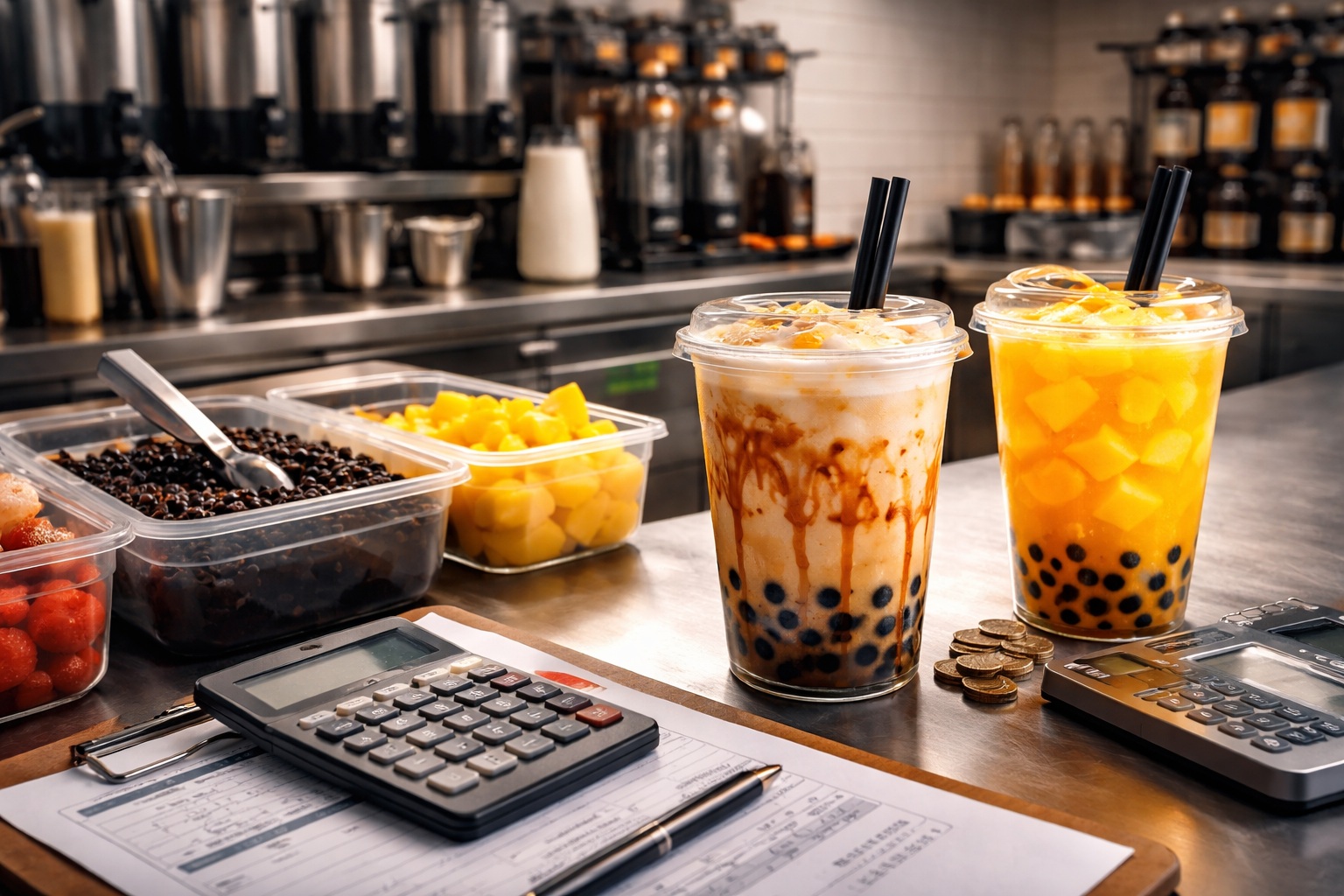
For many bubble tea shop owners, the early focus is on recipes, ingredients, and menu variety. But once a shop is operating smoothly, a new challenge emerges: profitability does not always grow with sales volume.
Operators often discover that even with steady customer traffic, margins remain thin. Rising ingredient costs, inconsistent portioning, staff inefficiencies during peak hours, and unclear pricing logic quietly erode profits—one cup at a time.
This is where advanced, operator-level cost control becomes critical.
Why Recipes Stop Being the Problem
Most established bubble tea shops already have:
-
A stable menu and standardized recipes
-
Trained staff capable of executing drinks consistently
-
Reliable suppliers and daily operations in place
Yet many owners still struggle to answer key questions:
-
What is the true cost per cup, including waste and over-portioning?
-
Which drinks generate profit—and which only create volume?
-
Why do margins fluctuate even when prices stay the same?
The issue is rarely the recipe itself. It is the system behind the recipe.
Cost of Goods (COGS): Understanding the Real Cost Per Cup
Many shops calculate COGS based only on ingredient purchase prices. In practice, the real cost per cup includes:
-
Portion variance across staff shifts
-
Prep loss from expired pearls, milk, or fruit
-
Inconsistent batching and shelf-life management
-
Peak-hour overuse driven by speed pressure
High-performing operators track COGS per drink category, not just per ingredient. This allows them to identify which drinks are sensitive to small cost increases—and which can absorb them.
Without this level of visibility, price adjustments become guesswork rather than strategy.
Portion Control Is an Operations Issue, Not a Staff Issue
Over-portioning is rarely intentional. It usually happens when:
-
Tools are not standardized
-
Staff rely on visual judgment during rush hours
-
Training focuses on speed, not cost awareness
Effective portion control systems combine:
-
Physical measuring tools for pearls, foam, milk, and fruit
-
Clear visual standards at the workstation
-
Workflow designs that reduce decision-making under pressure
When portion control is built into the process, consistency improves naturally—without slowing service.
Menu Engineering: Not All Bestsellers Are Profitable
One of the most common blind spots in bubble tea operations is assuming that popular drinks are profitable.
Advanced menu engineering evaluates drinks based on:
-
Contribution margin, not just sales volume
-
Prep time versus peak-hour labor impact
-
Ingredient volatility and shelf-life risk
Taiwanese operators often categorize menus into:
-
High-margin, low-risk core items
-
Traffic-driving items with controlled margins
-
Low-margin items that require pricing or formulation review
This approach allows shops to protect profitability while still meeting customer expectations.
Workflow Optimization During Peak Hours
Peak hours reveal operational weaknesses faster than any financial report.
Common inefficiencies include:
-
Bottlenecks at topping stations
-
Redundant movement between prep and assembly
-
Inconsistent handoffs between staff roles
Optimized workflows focus on:
-
Clear task segmentation
-
Pre-batching based on demand forecasting
-
Station layouts that minimize unnecessary motion
The result is not just faster service—but lower labor cost per cup during high-volume periods.
Waste Reduction Through Better Prep and Shelf-Life Management
Waste is often treated as unavoidable. In reality, it is frequently the result of:
-
Overproduction during prep
-
Misaligned batch sizes and actual demand
-
Unclear shelf-life standards across shifts
Advanced operators align prep volume with:
-
Time-of-day demand patterns
-
Historical sales data
-
Realistic shelf-life windows
Reducing waste by even a small percentage can have a measurable impact on monthly profit.
Pricing Logic: Learning From Taiwanese Benchmarks
Pricing is not simply about covering costs—it reflects positioning, efficiency, and operational maturity.
In Taiwan, pricing strategies often consider:
-
Target margin ranges per category
-
Cost buffers for ingredient volatility
-
Competitive density within a specific trade area
Rather than copying prices, successful overseas operators adapt the logic behind the pricing, aligning it with their own market conditions.
Moving From Intuition to Systems
At a certain stage, bubble tea operations can no longer rely on experience alone. Sustainable profitability requires:
-
Clear cost visibility
-
Repeatable operational systems
-
Data-informed decision-making
This shift—from intuition to structure—is often what separates stable shops from scalable businesses.
Want to Go Deeper?
If you are already operating a bubble tea shop and looking to improve profitability, efficiency, and cost control—not beginner recipes—structured, operator-level guidance can make a meaningful difference.
If you would like to explore a customized, on-site or operator-focused training discussion, feel free to contact us to start a conversation.
Contact us to discuss your operational goals and challenges.