
NEWS & EVENTS

The Hidden Risks in the Bubble Tea Industry That Brands Can’t Ignore in 2026
December 29,2025
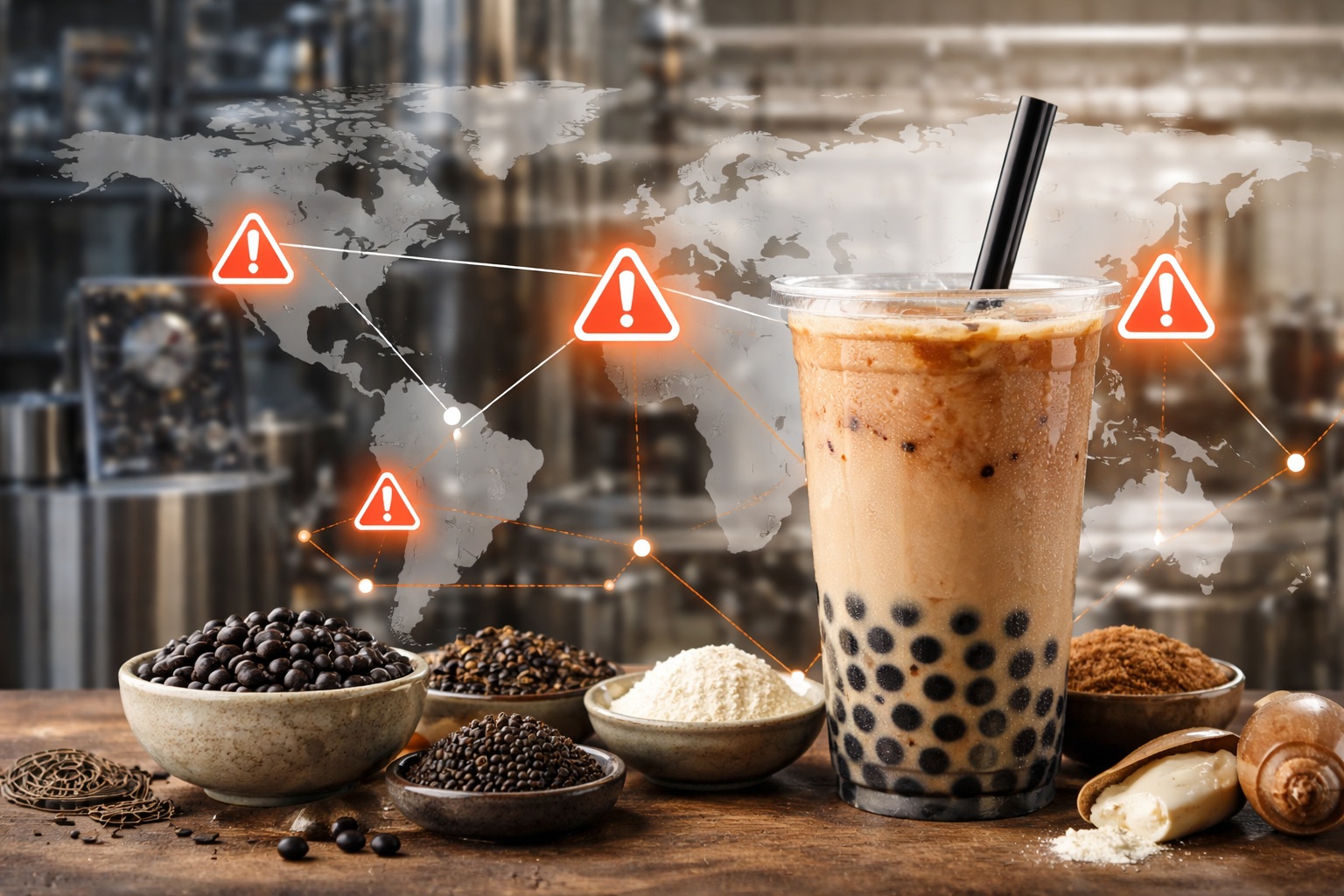
The global bubble tea market continues to expand, driven by younger consumers, international demand, and constant product innovation. From Europe to India and the Middle East, bubble tea has evolved from a niche Asian drink into a globally recognized beverage category.
However, as the industry matures, many of the real challenges facing bubble tea brands are no longer visible on the surface. In 2026, the most serious risks are not about popularity or demand—but about execution, consistency, and long-term scalability.
This article explores the hidden risks in the bubble tea industry that brands must understand in order to grow sustainably.
Bubble Tea Is No Longer a Simple Beverage
One of the most overlooked risks in the bubble tea industry is underestimating its complexity.
Modern bubble tea is a modular beverage system. A single product may involve:
-
A tea base
-
Multiple sweetener options
-
Tapioca pearls or other toppings
-
Milk, plant-based alternatives, or foam layers
-
Flavor powders or syrups
Each component introduces variables in sourcing, preparation, and quality control. As menus expand and customization increases, operational complexity grows exponentially. Brands that treat bubble tea as a “simple drink” often struggle to maintain consistency once they scale beyond a few locations or enter new markets.
Ingredient Consistency Is a Silent Brand Killer
Consumers may forgive limited menu options, but they rarely tolerate inconsistency.
One of the most serious hidden risks in 2026 is unstable ingredient quality. Variations in tapioca texture, sweetness levels, foam density, or flavor intensity can quietly erode brand trust—especially across multiple regions.
These issues often stem from:
-
Inconsistent raw material sourcing
-
Frequent supplier changes driven solely by cost
-
Lack of standardized specifications
-
Insufficient testing across production batches
Brands that grow too quickly without locking in ingredient standards often discover that scaling magnifies small quality gaps into major brand problems.
Supply Chain Fragility Is Still Underestimated
Despite lessons from recent global disruptions, many bubble tea brands still underestimate supply chain risk.
In 2026, supply chains remain vulnerable to:
-
Raw material price volatility
-
Logistics delays
-
Regulatory changes affecting imports
-
Over-reliance on single-source suppliers
What makes bubble tea especially sensitive is that many key ingredients—such as tapioca pearls, specialty powders, and functional additives—require precise formulation. Substituting suppliers is rarely straightforward and can impact taste, texture, and shelf stability.
Brands that lack contingency planning often face sudden menu changes, production stoppages, or rushed reformulations that damage customer experience.
Global Compliance Is Becoming More Complex
As bubble tea expands globally, regulatory compliance has become a major hidden risk.
Different markets impose different requirements related to:
-
Ingredient labeling
-
Food additives and colorants
-
Sugar content disclosures
-
Import documentation and certifications
What works in one region may not be legally viable in another. Brands that expand internationally without early compliance planning often encounter costly delays, forced reformulations, or rejected shipments.
In 2026, compliance is no longer a backend task—it is a core part of product development and market strategy.
Customization Can Undermine Scalability
Customization is one of bubble tea’s greatest strengths—but also a structural risk.
Excessive customization without operational discipline can lead to:
-
Inconsistent product outcomes
-
Increased staff training complexity
-
Higher error rates during peak hours
-
Difficulty maintaining brand standards across locations
Successful brands in 2026 are learning to balance flexibility with structure—offering controlled customization within clearly defined ingredient systems rather than unlimited variation.
Business Models Matter More Than Ever
Another overlooked risk lies in outdated business models.
Traditional franchise structures are increasingly challenged by:
-
High upfront costs
-
Limited flexibility
-
Slow adaptation to local markets
Many emerging brands are shifting toward private label, OEM, or hybrid supply models that allow faster product testing and lower operational risk. However, these models require a much deeper understanding of ingredients, production, and supply chain coordination.
Without that expertise, brands may gain speed but lose control.
Preparing for Long-Term Success in 2026
The bubble tea industry in 2026 is not declining—but it is becoming more demanding.
Brands that succeed are not necessarily those with the most stores or the boldest marketing. They are the ones that:
-
Invest early in ingredient consistency
-
Build resilient supply chains
-
Understand regulatory environments
-
Design products with scalability in mind
Recognizing hidden risks is not about slowing down growth. It is about building foundations that allow growth to last.
Contact Us
If you are developing, scaling, or optimizing a bubble tea brand and would like to discuss ingredient strategy, supply chain planning, or long-term scalability from an industry perspective, we welcome you to get in touch.
Contact us to explore how informed supply-side decisions can support sustainable growth in an evolving global bubble tea market.