
NEWS & EVENTS

Global Bubble Tea Labeling Requirements: What Importers Must Know Before Exporting
February 09,2026
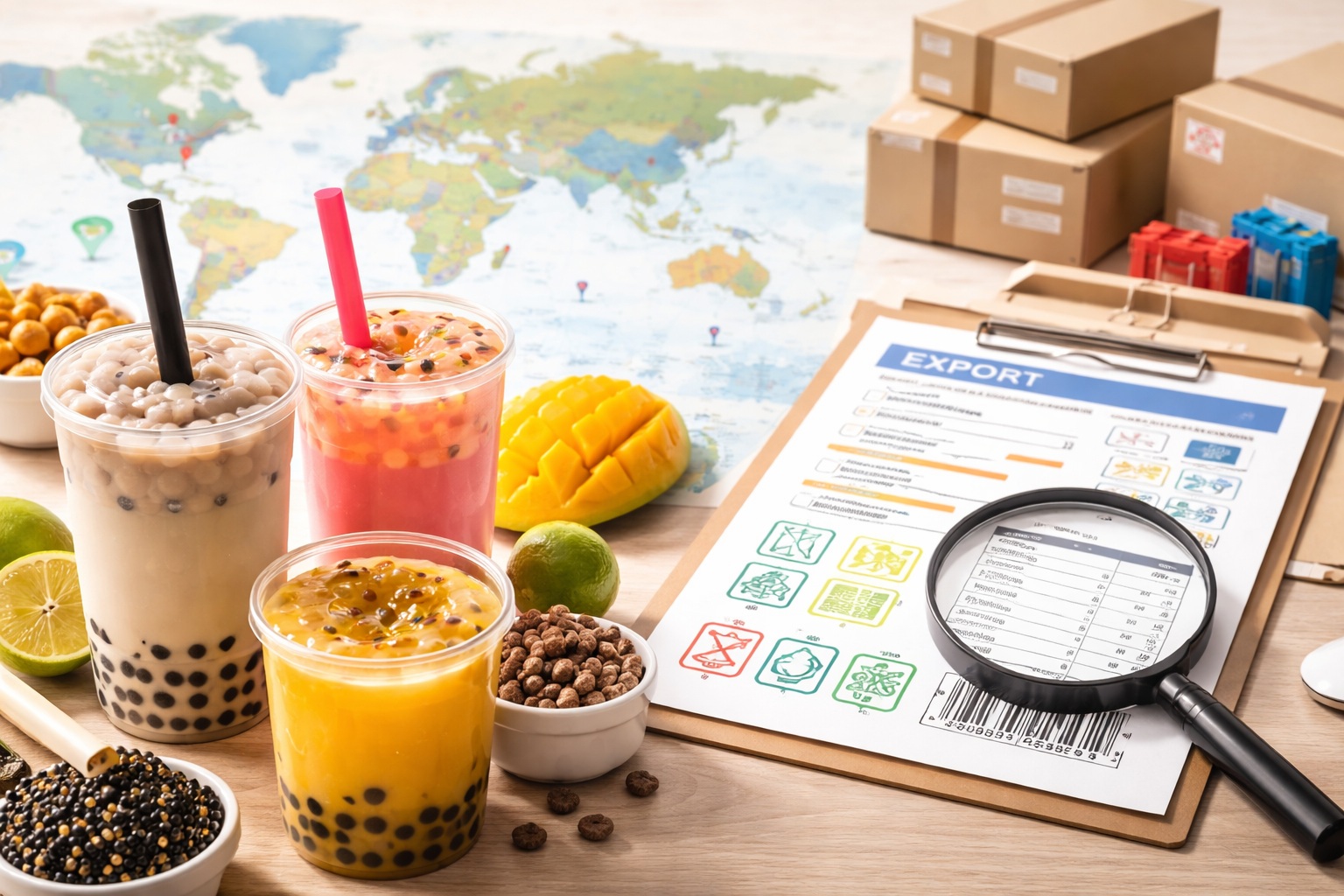
The global bubble tea market continues to expand across North America, Europe, the Middle East, and emerging Asian markets. As international demand increases, so do regulatory expectations.
For importers, distributors, and private label buyers, understanding global bubble tea labeling requirements is not optional—it is a critical part of export compliance.
Improper labeling can result in customs delays, rejected shipments, fines, or permanent market restrictions. Before exporting milk tea powders, syrups, or tapioca pearls, businesses must understand the food labeling regulations of their target country.
Why Bubble Tea Labeling Compliance Matters
Food labeling regulations exist to protect consumers and ensure transparency. Authorities such as:
-
U.S. FDA
-
European Commission (EU Regulation No 1169/2011)
-
CFIA (Canada)
-
GCC Standardization Organization (Middle East)
require specific product information to appear clearly on packaging.
Failure to meet bubble tea import regulations can result in:
-
Shipment detention
-
Mandatory relabeling
-
Product recalls
-
Loss of distribution licenses
For exporters of tapioca pearls, milk tea premix, and flavor syrups, regulatory preparation should begin before production, not after shipment.
Core Elements of Bubble Tea Labeling Requirements
Although regulations differ by country, most markets require the following core components:
1. Product Name
The name must clearly identify the food category. For example:
-
Tapioca Pearls
-
Instant Milk Tea Powder
-
Brown Sugar Syrup
Avoid vague naming that may cause customs confusion.
2. Ingredient Declaration Requirements
One of the most important aspects of food labeling regulations is the ingredient list.
Most countries require:
-
Ingredients listed in descending order by weight
-
Clear identification of additives
-
Allergen disclosure (e.g., milk, soy)
For example, milk tea powder typically must disclose:
-
Non-dairy creamer components
-
Stabilizers
-
Flavorings
-
Sweeteners
Incorrect ingredient declaration is one of the most common reasons for export rejection.
3. Nutrition Facts Panel
Countries like the United States and Canada require a standardized nutrition facts format.
The panel usually includes:
-
Calories
-
Total fat
-
Sugar content
-
Sodium
-
Protein
The format, font size, and language may vary depending on local regulations.
4. Country of Origin
Clear origin labeling (e.g., “Product of Taiwan”) is often mandatory for customs clearance and tariff classification.
5. Net Weight and Units
Measurements must comply with local unit systems:
-
U.S.: ounces + grams
-
EU: grams / kilograms
-
Middle East: metric system
6. Language Requirements
Many countries require labeling in the official local language.
Examples:
-
Canada: English and French
-
Middle East: Arabic
-
EU: Language of the destination country
Bilingual or multilingual packaging is often necessary for global distributors.
Special Considerations for Tapioca Pearls Export
When exporting tapioca pearls, additional compliance checks may apply:
-
Shelf life validation
-
Storage instructions
-
Batch traceability
-
HS code classification
-
Additive approval status
Some countries also regulate food additives such as preservatives or color stabilizers differently.
Understanding tapioca pearls export requirements can prevent costly border inspections.
Halal and Religious Certification
In Middle Eastern and certain Southeast Asian markets, Halal certification may be required.
This affects:
-
Ingredient sourcing
-
Processing methods
-
Label placement
Certification logos must follow strict usage guidelines.
Private Label and OEM Compliance Risks
For importers developing private label bubble tea products, labeling compliance becomes more complex.
Responsibility may fall on:
-
The manufacturer
-
The brand owner
-
The importer of record
Clear documentation and export compliance coordination are essential before printing packaging.
Preparing for International Export
To ensure smooth customs clearance:
-
Confirm labeling requirements before production.
-
Review ingredient approval status in the destination market.
-
Align nutrition panels with local formatting rules.
-
Validate translations.
-
Keep regulatory documentation accessible.
Regulatory preparation reduces the risk of shipment rejection and protects long-term market access.
Final Thoughts
As the bubble tea industry expands globally, regulatory standards are becoming stricter—not more relaxed.
Importers who understand global bubble tea labeling requirements gain a competitive advantage. Proper labeling protects your brand, reduces financial risk, and ensures smoother distribution.
Need Guidance on Export Compliance?
If you are planning to import milk tea powder, syrups, or tapioca pearls into your market and want to ensure your labeling meets local food regulations, our team can assist with documentation and export preparation support.
Contact us to discuss your target market and compliance requirements before your next shipment.