
NEWS & EVENTS

Bubble Tea Store Formats Explained: Which Business Model Is Right for Your Market?
June 02,2026
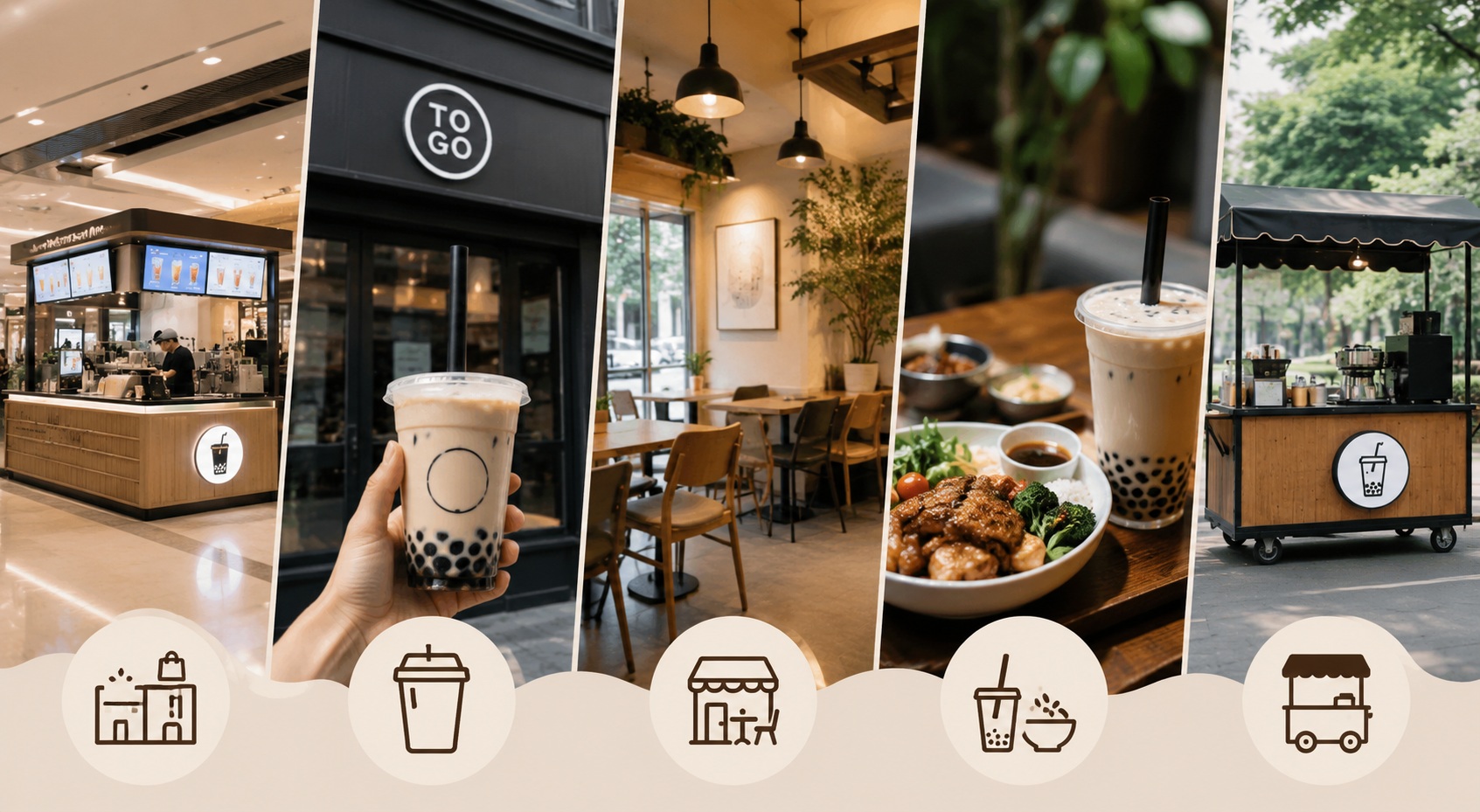
The global bubble tea industry continues to evolve as consumer preferences, urban development, and dining habits change across different markets. While product quality remains a key factor for success, choosing the right store format is equally important for long-term growth.
There is no single "best" bubble tea business model. A format that performs exceptionally well in a busy metropolitan area may struggle in a suburban neighborhood, while a takeaway-focused concept may outperform a full-service café in regions where convenience is highly valued.
This guide explores five common bubble tea store formats, analyzing their strengths, challenges, and ideal market conditions to help entrepreneurs, investors, and franchise operators make informed decisions.
1. Mall Kiosk: Maximizing Visibility and Foot Traffic
Mall kiosks are one of the most recognizable bubble tea formats worldwide. Typically located in shopping centers, transportation hubs, or high-traffic commercial complexes, these compact operations focus on serving customers quickly and efficiently.
Advantages
- Access to consistent foot traffic throughout the day
- Strong brand exposure among diverse customer groups
- Convenient for impulse purchases
- Efficient use of limited space
- Ideal for simplified menus and fast service
Many successful bubble tea brands initially entered new markets through mall kiosks because they provide immediate visibility and consumer awareness.
Challenges
- Limited seating or customer experience opportunities
- Restricted storage and preparation space
- Dependence on mall traffic patterns
- Competition from neighboring food and beverage brands
Best For
- Emerging brands entering a new market
- High-density urban locations
- Fast-moving beverage concepts
- Operators prioritizing volume and brand awareness
2. Takeaway Shops: Built for Speed and Convenience
Takeaway-focused stores have become increasingly popular as consumers seek quick, convenient beverage options. These locations often prioritize order efficiency, delivery integration, and customer turnover.
Advantages
- Streamlined operations
- Faster service times
- Strong compatibility with delivery platforms
- Easier menu standardization
- Suitable for busy business districts and transportation corridors
The rise of mobile ordering and food delivery services has significantly increased the appeal of takeaway-focused bubble tea stores.
Challenges
- Limited opportunities for customer engagement
- Lower average visit duration
- Less emphasis on brand atmosphere
- Higher dependence on local convenience demand
Best For
- Commercial districts
- Transit-oriented locations
- Markets with strong delivery adoption
- Brands focused on operational efficiency
3. Street-Side Dine-In Cafés: Building a Lifestyle Brand
Unlike takeaway concepts, street-side cafés create a more immersive customer experience. These stores encourage guests to spend time on-site, making them suitable for premium positioning and community engagement.
Advantages
- Stronger brand identity and customer loyalty
- Increased opportunities for social media exposure
- Comfortable environment for repeat visits
- Potential to introduce premium beverages and seasonal offerings
Consumers increasingly view bubble tea as part of a lifestyle experience rather than simply a beverage purchase. A well-designed café can become a destination rather than a transaction point.
Challenges
- Greater operational complexity
- More extensive staffing requirements
- Need for consistent atmosphere and service quality
- Location selection becomes especially critical
Best For
- Lifestyle-oriented brands
- Premium bubble tea concepts
- University districts
- Residential communities with strong repeat traffic
4. Bubble Tea and Light Meal Concepts: Increasing Customer Spending
Many operators have expanded beyond beverages by incorporating snacks, desserts, rice bowls, sandwiches, or other light meal options. This hybrid model aims to attract customers throughout the day rather than only during beverage-focused occasions.
Advantages
- Higher average transaction value
- Multiple revenue streams
- Greater customer retention
- Increased meal-time traffic opportunities
In markets where consumers frequently seek casual dining experiences, combining beverages with food can create a stronger competitive advantage.
Challenges
- More complex inventory management
- Expanded kitchen and preparation requirements
- Additional food safety considerations
- Broader operational expertise needed
Best For
- Family-oriented markets
- Shopping districts
- Mixed-use commercial areas
- Operators seeking menu diversification
5. Mobile Carts and Pop-Up Concepts: Flexibility and Market Testing
Mobile carts, seasonal stands, and pop-up stores offer flexibility that traditional retail locations cannot match. They are commonly used for festivals, events, tourist destinations, and market testing initiatives.
Advantages
- High mobility
- Ability to reach different customer groups
- Useful for testing new products or markets
- Effective for seasonal demand
Many brands use pop-up concepts as a low-risk strategy to evaluate consumer interest before establishing a permanent location.
Challenges
- Weather dependency
- Limited menu capacity
- Variable customer traffic
- Reduced brand permanence
Best For
- Events and festivals
- Tourist attractions
- New market testing
- Seasonal promotions
Key Factors to Consider When Choosing a Bubble Tea Store Format
Regardless of the concept, successful operators typically evaluate the following factors before selecting a store format:
Customer Behavior
Understanding how local consumers purchase beverages is essential. Some markets prioritize convenience, while others value atmosphere and social experiences.
Competition
Analyzing nearby beverage brands can reveal opportunities for differentiation and help determine which format is most suitable.
Delivery Market Maturity
In regions where delivery platforms are widely used, takeaway-oriented models may offer stronger growth potential.
Brand Positioning
A premium lifestyle brand may benefit from a café environment, while a value-driven concept may perform better as a kiosk or takeaway store.
Operational Complexity
Different formats require varying levels of staffing, inventory management, equipment, and supply chain support.
The Right Format Depends on the Right Market
Successful bubble tea businesses rarely succeed because they copy another brand's store format. Instead, they succeed because they understand local consumer behavior, location dynamics, and operational requirements.
A mall kiosk may thrive in one city, while a dine-in café becomes the preferred model in another. Similarly, some markets favor convenience-driven takeaway stores, while others reward businesses that offer a complete dining experience.
The most effective strategy is to align your store format with your target customers, long-term growth plans, and operational capabilities.
Finding the Right Partner for Long-Term Success
Choosing the right store format is only one part of building a successful bubble tea business. Equally important is establishing a reliable supply chain that can support product consistency, menu innovation, and future growth.
As consumer expectations continue to evolve, many operators are looking beyond simply sourcing ingredients. They seek partners who understand market trends, product development, and the operational challenges that come with expanding a beverage business.
Whether you are launching your first bubble tea shop, expanding into new markets, or refining an existing concept, having access to dependable ingredients and industry expertise can help reduce risks and improve long-term performance.
Contact Us
If you're exploring a bubble tea business opportunity or looking for ingredient solutions tailored to your market, our team is happy to share industry insights and product recommendations based on your business goals.