
NEWS & EVENTS

Bubble Tea Ingredients Cost in Europe: Small Packaging vs Bulk Buying
April 07,2026
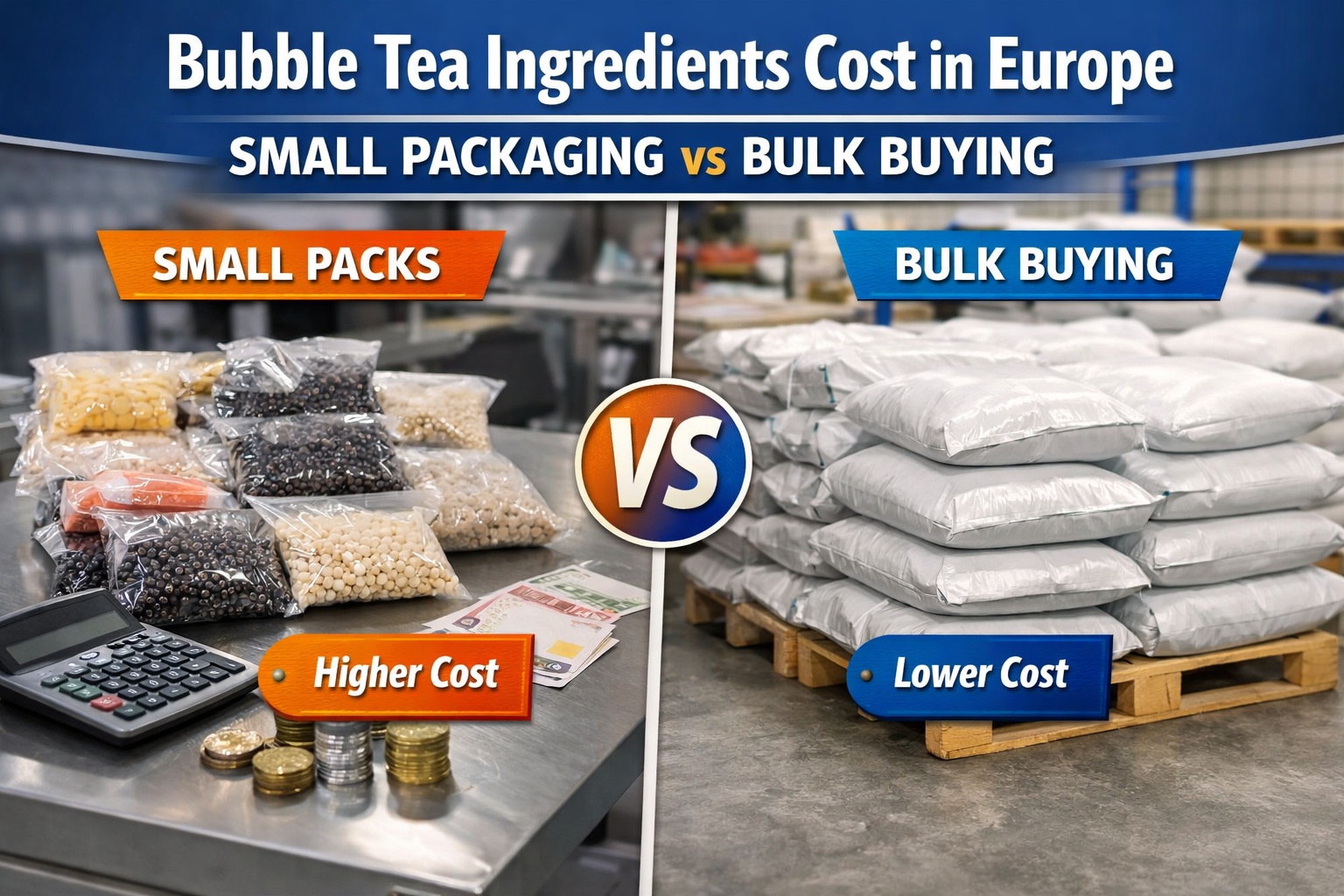
As the bubble tea market continues to grow across Europe, more entrepreneurs are entering the industry—many of them starting with small-scale operations. One of the most common decisions new shop owners face is whether to purchase ingredients in small packaging or switch to bulk buying.
While small-pack ingredients may seem like a safer starting point, the long-term cost implications and operational impact are often underestimated. Understanding the difference between these two sourcing strategies is essential for building a sustainable and profitable bubble tea business.
Why Small-Pack Ingredients Are Attractive for New Bubble Tea Shops
For new entrants in the European bubble tea market, small packaging offers a low-risk entry point.
First, it requires less upfront investment. Shop owners can purchase limited quantities of tea, tapioca pearls, syrups, and powders without committing significant capital. This is especially appealing for businesses that are still testing their menu or validating local demand.
Second, small packs provide flexibility. Operators can experiment with different flavors, suppliers, and product combinations without being tied to large inventory volumes.
Finally, there is a psychological advantage—small packaging feels safer. For many first-time business owners, minimizing inventory risk is a top priority.
However, while these advantages support early-stage operations, they often come with hidden trade-offs.
The Hidden Cost of Small Packaging
One of the most overlooked factors in ingredient sourcing is the cost per unit.
Small-pack ingredients typically carry a significantly higher cost per kilogram or per serving. This is due to additional packaging, handling, and distribution layers. Over time, these incremental costs accumulate and directly impact profit margins.
In Europe, where logistics and import costs are already relatively high, the price gap between small packaging and bulk purchasing becomes even more pronounced.
In addition:
- Shipping costs are less efficient when spread across smaller quantities
- Frequent reordering increases administrative and operational overhead
- Price fluctuations are harder to manage due to inconsistent purchasing volumes
As a result, businesses relying heavily on small-pack ingredients often find it difficult to maintain stable and competitive pricing.
Operational Challenges of Using Small-Pack Ingredients
Beyond cost, small packaging can also introduce operational inefficiencies.
Frequent restocking is one of the most common issues. Smaller quantities require more frequent orders, which increases workload and raises the risk of stockouts—especially for high-demand items like tapioca pearls or milk tea powders.
Consistency can also become a concern. Different batches or suppliers may result in slight variations in taste or quality, which directly affects customer experience.
Inventory management becomes more complex as well. Managing multiple SKUs in small quantities can lead to disorganization, wastage, or expired products—particularly for shops with limited storage space.
Over time, these operational challenges can limit a shop’s ability to scale.
Selling Small-Pack Products: Key Considerations
Some businesses consider selling small-pack bubble tea ingredients as a product line, particularly in retail or online channels.
While this can create an additional revenue stream, it requires careful planning.
Key considerations include:
- Packaging and labeling compliance (especially under EU food regulations)
- Shelf life and storage conditions
- Pricing strategy that accounts for higher packaging costs
- Inventory turnover and SKU management
It is important to recognize that small-pack products function more like retail goods rather than core operational supplies. Without proper pricing and positioning, margins can quickly shrink.
Why Bulk Buying Improves Profit Margins
As a business stabilizes, bulk purchasing becomes a more effective and scalable strategy.
The most immediate benefit is cost reduction. Buying in larger quantities significantly lowers the cost per unit, allowing shops to improve margins or remain competitive in pricing.
Bulk sourcing also enhances supply stability. With fewer orders and larger volumes, businesses can better plan inventory and reduce the risk of running out of key ingredients.
Operational efficiency improves as well:
- Fewer purchase orders
- Simplified inventory management
- More consistent product quality
For growing bubble tea shops in Europe, these advantages often translate directly into stronger profitability and smoother day-to-day operations.
When to Transition from Small Packs to Bulk Buying
Knowing when to shift from small packaging to bulk purchasing is a critical decision.
Some practical indicators include:
- Daily sales volume becomes stable and predictable
- Core menu items are established and no longer frequently changed
- Customer demand shows consistent growth
- The business begins planning expansion or a second location
At this stage, continuing to rely on small-pack ingredients may start to limit both profitability and scalability.
A Practical Approach to Scaling Your Ingredient Strategy
Rather than choosing one approach exclusively, many successful bubble tea businesses adopt a phased strategy:
Early stage:
Use small-pack ingredients to test the market and refine the menu.
Growth stage:
Gradually transition high-volume items (such as tea, pearls, and milk powders) to bulk purchasing, while keeping niche items in smaller quantities.
Expansion stage:
Standardize sourcing through bulk procurement and build long-term supplier relationships to ensure consistency and cost control.
This balanced approach allows businesses to manage risk while steadily improving efficiency and margins.
Conclusion
Choosing between small packaging and bulk buying is not just a cost decision—it is a strategic one.
Small-pack ingredients offer flexibility and lower initial risk, making them suitable for early-stage operations. However, as a business grows, the limitations in cost efficiency and scalability become increasingly apparent.
Bulk purchasing, on the other hand, provides the foundation for long-term profitability, operational stability, and business expansion.
For bubble tea businesses in Europe, aligning your sourcing strategy with your growth stage is key to building a sustainable and competitive operation.
If you would like to explore suitable options for your business stage, feel free to reach out for a discussion.
👉 Contact us to learn more about ingredient sourcing, bulk supply options, and customized solutions for your market.