
NEWS & EVENTS

Vegan Powder vs Regular Powder: What’s the Difference in Bubble Tea Ingredients?
January 13,2026
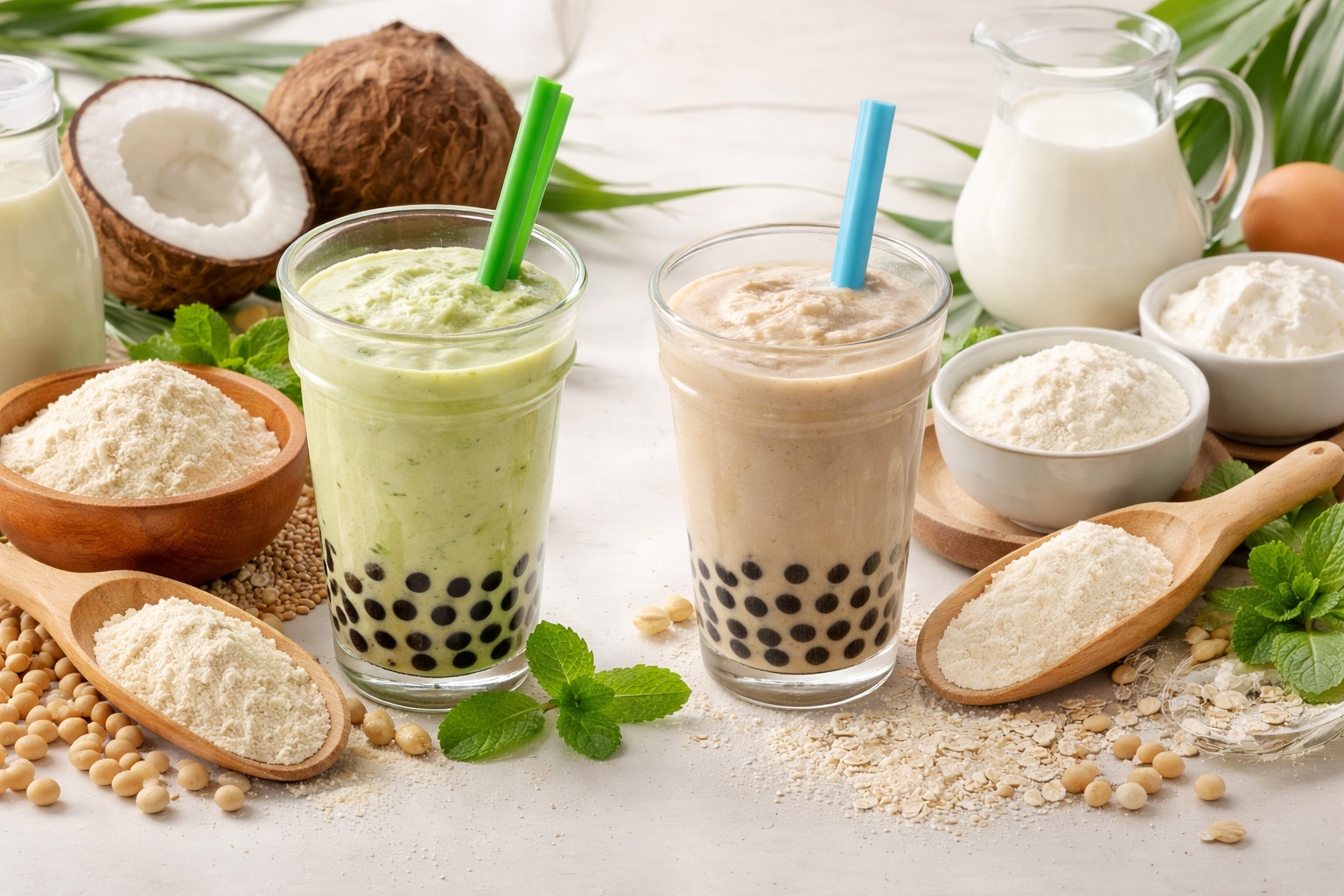
As global demand for bubble tea continues to expand, ingredient selection has become a strategic decision rather than a purely technical one. Among the most frequently asked questions from brand owners, importers, and distributors is the difference between vegan powder and regular powder used in bubble tea applications.
While both serve similar functional roles, their formulation, market suitability, and regulatory considerations can vary significantly. Understanding these differences is essential for brands targeting diverse international markets.
Understanding the Base Formulation
Regular Bubble Tea Powder
Regular bubble tea powder is typically formulated using dairy-derived ingredients, such as milk powder or whey-based components. These formulations are designed to deliver a creamy mouthfeel and familiar flavor profile that aligns with traditional milk tea recipes.
From a production standpoint, regular powders are widely used, cost-effective, and well established in many Asian markets.
Vegan Bubble Tea Powder
Vegan powder replaces animal-derived ingredients with plant-based alternatives, commonly sourced from soy, coconut, oat, or other non-dairy bases. The goal is to replicate the texture and taste of traditional milk-based powders while meeting vegan and dairy-free requirements.
Modern vegan formulations have evolved significantly, offering improved stability and consistency compared to earlier plant-based alternatives.
Ingredient Source and Labeling Considerations
One of the most critical differences lies in ingredient transparency and labeling.
-
Vegan powders must exclude all animal-derived components.
-
Regular powders may contain allergens such as milk or lactose.
For markets such as the European Union, India, and parts of the Middle East, accurate ingredient disclosure is essential. Vegan formulations often simplify compliance with:
-
Dairy-free labeling requirements
-
Vegan or plant-based product positioning
-
Certain religious or cultural dietary preferences
Taste and Mouthfeel Differences
Historically, dairy-based powders were considered superior in terms of creaminess. However, advancements in plant-based food technology have narrowed this gap.
Today:
-
Regular powders still deliver a classic, rich milk tea profile.
-
Vegan powders offer a lighter, cleaner taste that appeals to health-conscious consumers.
The choice often depends on menu positioning rather than quality alone.
Shelf Life and Stability
Both vegan and regular bubble tea powders are designed for extended shelf life under proper storage conditions. However, formulation differences can affect performance in specific environments.
-
Regular powders may be more sensitive to temperature fluctuations due to dairy content.
-
Vegan powders often demonstrate better stability in warmer climates, depending on the plant base used.
For exporters and distributors, this can influence logistics planning and inventory management.
Market Demand and Global Trends
Consumer preferences are shifting globally toward plant-based alternatives, driven by:
-
Health awareness
-
Sustainability concerns
-
Dietary restrictions
In many Western markets, vegan options are no longer niche products but expected menu items. Meanwhile, regular powders continue to dominate in regions where traditional milk tea remains the standard.
For brands expanding internationally, offering both formulations can provide greater flexibility.
Cost and Pricing Implications
Cost structures can differ depending on raw material sourcing and formulation complexity.
-
Regular powders often benefit from established supply chains.
-
Vegan powders may involve higher ingredient costs but can command stronger perceived value in certain markets.
Pricing decisions should align with target consumer expectations and regional purchasing power.
Choosing the Right Powder for Your Brand
There is no universal answer when choosing between vegan and regular bubble tea powder. The decision should be based on:
-
Target market regulations
-
Consumer preferences
-
Brand positioning
-
Distribution environment
Many successful brands adopt a dual-approach strategy, tailoring formulations to specific regions or customer segments.
Final Thoughts
Understanding the functional and market-driven differences between vegan and regular bubble tea powders allows brands to make informed, future-ready decisions. As global demand continues to diversify, flexibility in ingredient strategy is becoming a competitive advantage rather than an option.
Contact Us
If you are evaluating bubble tea ingredient options for different markets or exploring customized formulations, our team is available to discuss technical considerations, regulatory needs, and sourcing strategies.
Contact us to explore the most suitable solution for your brand.