
NEWS & EVENTS

Shipping Delays in Imported Bubble Tea Ingredients: Risks and How to Prepare
February 24,2026
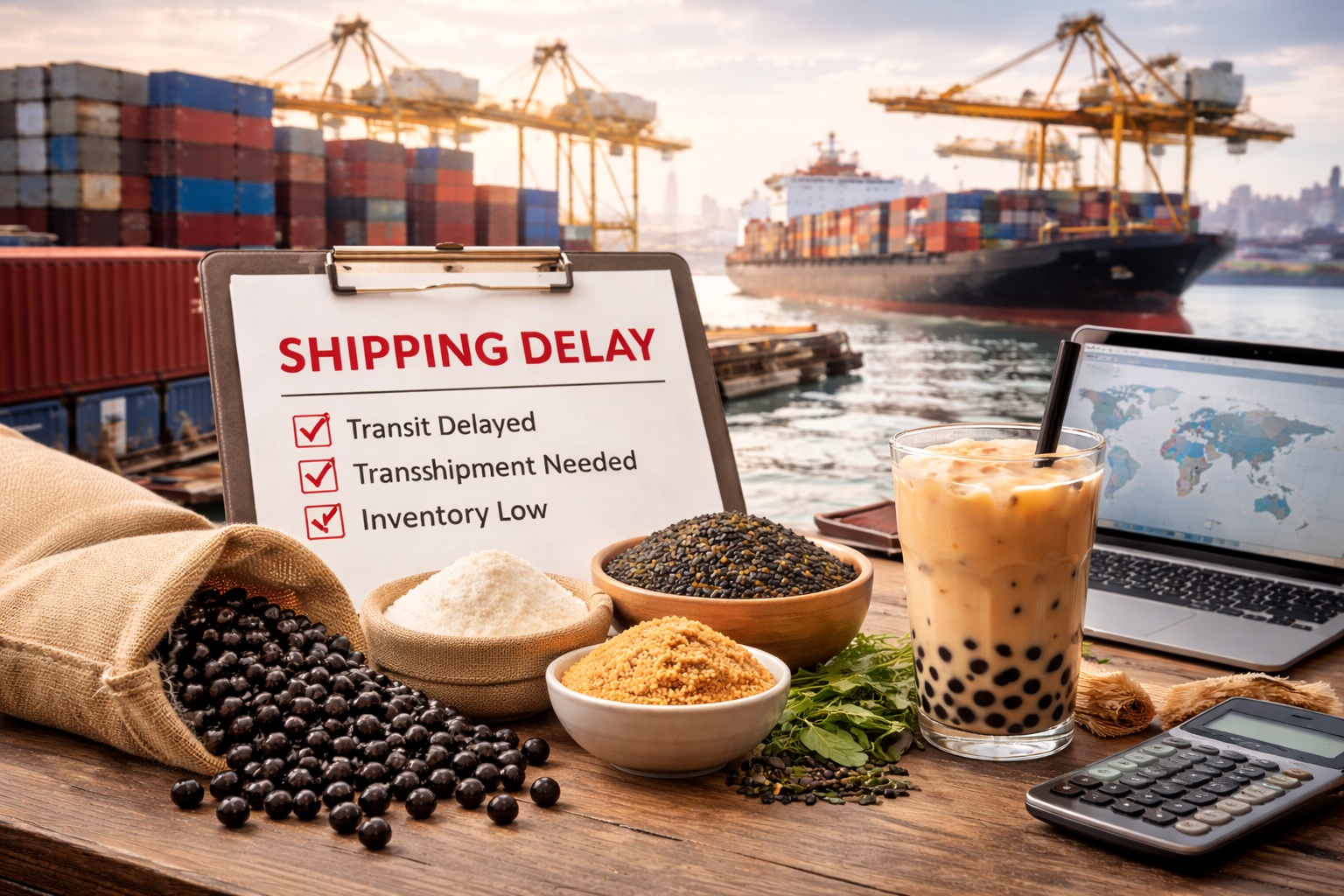
For importers in the U.S. and Europe, a delayed container doesn’t just mean inconvenience — it means disrupted promotions, tighter margins, and operational uncertainty.
The global bubble tea market continues to expand across North America and Europe. As brands scale, many rely on imported bubble tea ingredients such as tapioca pearls, milk tea powders, syrups, and specialty toppings. Working with a dependable bubble tea supplier with strong export coordination capabilities becomes critical in maintaining stable inventory flow.
Yet in today’s freight environment, shipping timelines are no longer fully predictable. Ocean freight volatility, vessel rollovers, and transshipment delays have made supply planning more complex than ever.
The question is no longer whether delays happen — but how well your business is prepared when they do.
Why Shipping Delays Have Become a Structural Risk
In the past, transit times were relatively stable. Today, several factors create ongoing uncertainty:
1. Vessel Rollovers During Peak Seasons
During high-demand periods, containers may be “rolled” to the next sailing due to space constraints. In major U.S. and European trade lanes, rollovers can add 7–14 days to transit time.
2. Transshipment Exposure
Many shipments are routed through major hubs such as Singapore or Busan before reaching Western markets. Each transfer increases the likelihood of:
-
Missed vessel connections
-
Schedule reshuffling
-
Unexpected delays
For importers running tight inventory cycles, even a one-week disruption can impact store-level availability.
3. Port Congestion and Inland Delays
Arrival at port does not guarantee immediate delivery. Congestion, chassis shortages, and inland transport bottlenecks can extend total lead time beyond the estimated arrival date.
How Delays Directly Affect Importers and Distributors
Inventory Gaps
Bubble tea ingredients are often core to menu consistency. A missing SKU can lead to:
-
Temporary removal of high-margin items
-
Inconsistent flavor profiles
-
Reduced customer satisfaction
Margin Compression
When containers are delayed, businesses may resort to:
-
Emergency air freight
-
Spot purchases at higher prices
-
Holding excess safety stock
Each of these reduces profitability.
Cash Flow Strain
Extended transit times increase capital lock-up. A shipment delayed by 10–15 days means working capital remains tied up longer than forecasted.
What Professional Importers Do Differently
Experienced distributors and multi-store operators do not eliminate risk — they design around it.
1. Plan for Variability, Not Ideal Transit Time
Instead of assuming a 30-day transit, planning models account for possible 40–45 day scenarios during peak seasons.
2. Diversify Shipments
Splitting orders across sailings reduces reliance on a single vessel’s arrival.
3. Confirm Routing Transparency
Understanding whether a shipment is direct or transshipped allows better contingency planning.
4. Align Promotions With Confirmed Inventory
Marketing campaigns should follow inventory confirmation — not estimated vessel arrival.
5. Work With Export-Ready Suppliers
Partnering with an experienced international bubble tea supplier ensures clearer production scheduling, reinforced packaging standards, and proactive shipment communication.
Reliable manufacturers provide:
-
Clear production lead times
-
Accurate documentation
-
Advance notice of schedule changes
Strong coordination between supplier and importer reduces preventable disruptions.
From Reactive to Controlled Supply Planning
Shipping delays are now part of global trade dynamics. The difference between struggling businesses and resilient ones lies in structured planning.
Importers that maintain rolling 60–90 day forecasts and collaborate closely with a structured bubble tea ingredients supplier are better positioned to maintain menu stability, protect margins, and improve long-term predictability.
In volatile freight markets, predictability becomes a competitive advantage.
Plan Your Next Shipment With Greater Visibility
If you are importing bubble tea ingredients into North America or Europe and want clearer lead times, structured export coordination, or better routing transparency, professional supply planning can significantly reduce operational risk.
Contact us to discuss your upcoming orders and improve supply chain visibility.