
NEWS & EVENTS

How Modular Bubble Tea Ingredients Are Changing Home & Startup Markets
January 26,2026
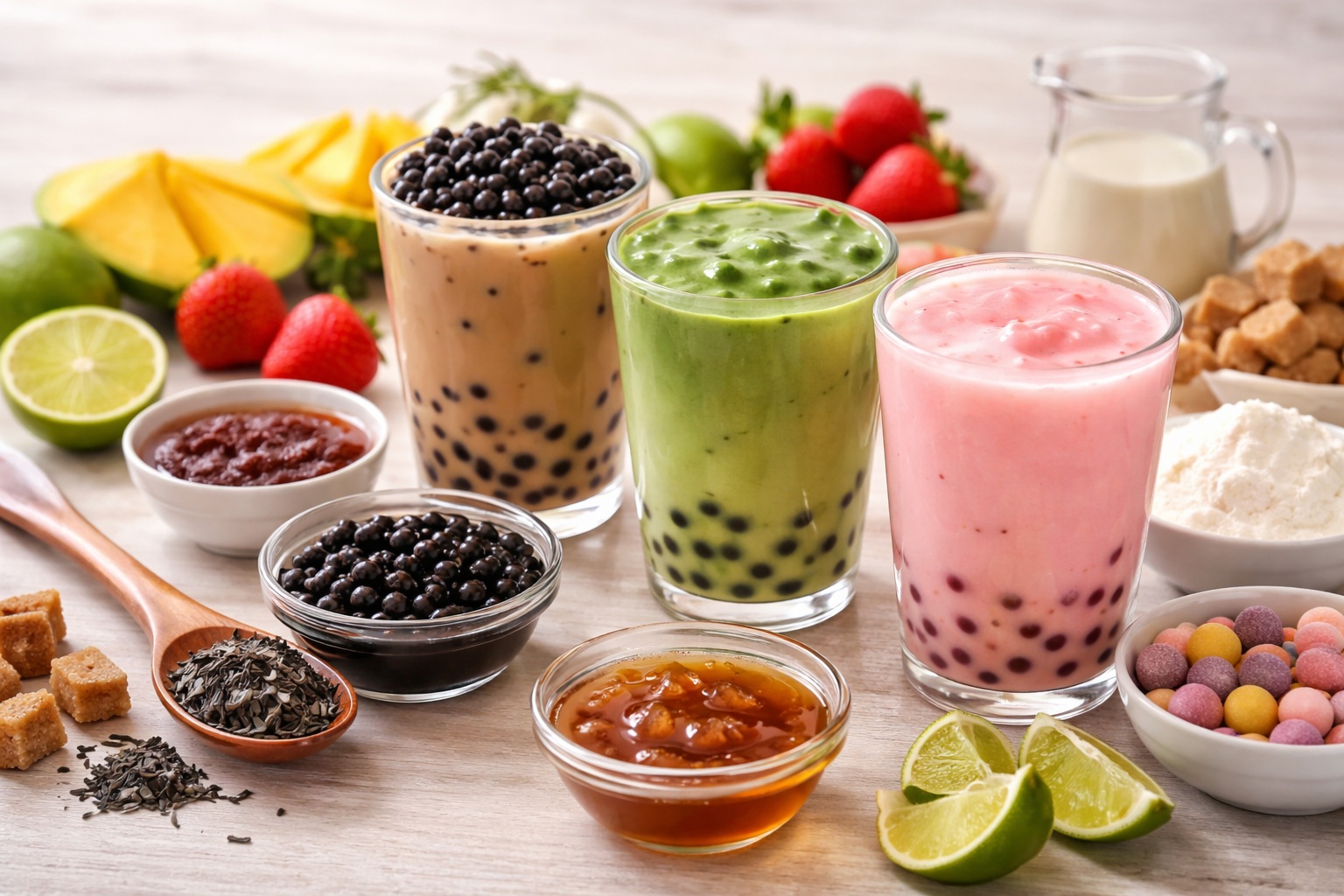
The global bubble tea industry has entered a new phase.
Beyond rapid store expansion and franchise-driven growth, a quieter but equally important shift is taking place — how bubble tea products are designed, packaged, and introduced to the market.
For home consumers and early-stage brands alike, modular bubble tea ingredients are becoming a preferred approach, offering flexibility that traditional all-in-one kits often cannot provide.
The Challenge New Bubble Tea Brands Face Today
For many first-time bubble tea entrepreneurs, the initial challenge is not branding or marketing — it is decision overload.
Common questions include:
-
How much product should I buy before demand is proven?
-
What serving size actually fits my target market?
-
Should I commit to a full product kit, or test individual ingredients first?
-
How do I balance minimum order quantities (MOQ) with shelf life risk?
These uncertainties are especially common among:
-
First-time store owners
-
Brands targeting home consumption or small retail channels
-
Startups still refining their recipes and positioning
In this environment, flexibility often matters more than speed.
Why Modular Ingredients Are Gaining Momentum
Modular bubble tea ingredients allow brands and consumers to purchase components — such as tea bases, tapioca pearls, syrups, or milk foam powders — separately rather than as a fixed kit.
This approach offers several advantages.
1. Greater Control Over Customization
Taste preferences vary significantly by region, age group, and consumption context.
What works in one market may not translate directly to another.
By sourcing ingredients individually, brands can:
-
Adjust sweetness and texture more precisely
-
Experiment with recipe variations without reworking an entire kit
-
Respond faster to customer feedback
For home consumers, this flexibility mirrors real shop customization — one of bubble tea’s core appeals.
2. Lower Risk During Market Testing
One of the biggest pain points for early-stage brands is overcommitting too early.
Fixed kits often require:
-
Larger upfront investment
-
Higher inventory exposure
-
Limited ability to pivot after launch
Modular ingredients reduce this risk by allowing brands to:
-
Test one product category at a time
-
Scale successful items gradually
-
Avoid locking capital into slow-moving SKUs
In practice, many successful bubble tea brands refine their offerings after launch, not before.
3. More Practical Packaging Decisions
Packaging size plays a critical role in cost control, storage, and expiration management.
While smaller packages may appear attractive, they can:
-
Increase per-unit cost
-
Complicate logistics
-
Raise expiration risk if turnover is slower than expected
For emerging brands, the goal is rarely “the smallest package possible.”
Instead, it is finding a balance between flexibility and operational efficiency.
Modular sourcing makes it easier to select packaging formats aligned with real usage patterns rather than assumptions.
Kits vs. Individual Components: When Each Makes Sense
Both approaches still have a place in the market.
Kits may work well when:
-
Training consistency is the top priority
-
Recipes are fixed and standardized
-
Speed of rollout matters more than customization
Modular ingredients are often better suited for:
-
Early-stage brands testing market fit
-
Home-consumption or retail-focused products
-
Brands positioning themselves around personalization or premium quality
The key is matching the format to the brand’s current stage — not future expectations.
Building a System That Can Grow
Choosing modular ingredients is not about avoiding structure.
It is about building a system that evolves with the business.
For new bubble tea brands, the most sustainable growth often comes from:
-
Understanding real consumption behavior
-
Managing inventory risk carefully
-
Keeping room for adjustment as the market responds
Suppliers who understand these realities can play a meaningful role — not by selling more products, but by helping brands make better early decisions.
Let's Talk About Your Next Step
If you are currently evaluating ingredient formats, packaging options, or serving sizes for your bubble tea concept, discussing real-world use cases early can help avoid costly adjustments later.
Whether you are exploring modular components, full kits, or a combination of both, having the right conversation at the right time matters.
Contact us to discuss ingredient structures, packaging considerations, and practical options for early-stage bubble tea brands.